
 English


Views: 0 Author: Site Editor Publish Time: 2026-10-20 Origin: Site


Selecting the right hardware configuration goes far beyond basic wattage matching. Field experience shows that a one-size-fits-all approach inevitably leads to system bottlenecks. Each unit features internal architecture engineered for distinct energy management scenarios. Depending on your geographic location, local utility regulations, and personal energy independence goals, choosing the appropriate topology is the most critical step in your system design.
Grid-interactive units remain the standard choice for residential properties situated in urban environments with reliable municipal infrastructure. These devices synchronize their alternating current output directly with the frequency of the local utility grid. When your rooftop array generates more electricity than your household currently demands, the system pushes that surplus power back into the utility network. Homeowners often earn financial credits through regional net metering programs as a result of this seamless export.
From a strict safety standpoint, these grid-tied units must incorporate rapid shutdown protocols and anti-islanding protection. Specifically, if a severe storm knocks out neighborhood power lines, the equipment instantly powers down. This automatic isolation prevents the system from back-feeding live high-voltage electricity into the grid. Without this feature, utility line workers attempting repairs would face lethal threats. Consequently, the primary limitation of this setup is absolute grid dependence. Without a battery backup, your home will go dark during a blackout, even under a blazing midday sun.
For remote hunting cabins, expansive agricultural facilities, or recreational vehicles navigating off the beaten path, an off grid solar inverter is the mandatory solution. Unlike their grid-tied counterparts, these specialized setups operate in complete isolation from municipal power companies. Solar generation is inherently intermittent, halting entirely at night and dropping significantly during heavy overcast weather. Therefore, these standalone systems rely heavily on robust deep-cycle battery banks to store the direct current harvested during daylight hours.
This hardware draws stored energy directly from the batteries and transforms it into the necessary 120V or 240V AC output required to operate standard household devices. When designing an off-grid system, engineers must carefully size the equipment to accommodate massive surge wattages demanded by heavy inductive loads. Picture the sudden electrical spike required to kickstart a deep well water pump or a heavy-duty compressor in an air conditioning unit. Your hardware must handle that instantaneous draw without tripping internal breakers.
Homeowners increasingly demand the financial advantages of a grid connection without sacrificing security during unexpected utility failures. To meet this complex demand, the hybrid solar inverter has emerged as the most advanced technological compromise available today. Acting as a sophisticated central energy management hub, this hardware simultaneously orchestrates inputs and outputs across three distinct sources: the rooftop array, a localized battery storage bank, and the municipal grid.
Under normal daily conditions, this multi-mode setup operates identically to a standard grid-tied system. It optimizes solar consumption to slash monthly bills while exporting any excess generation. However, the moment the grid fails, internal transfer switches act in milliseconds to physically isolate the property from the dead utility lines. The system then fluidly transitions into an independent microgrid. It pulls sustained power from both the sun and the batteries to keep your refrigerator running and the lights on. Due to this seamless dual-role capability, industry veterans frequently refer to this versatile hardware as an on off grid inverter. While the initial capital investment is noticeably higher, the unparalleled peace of mind makes it the fastest-growing segment in the residential renewable sector.
A recurring debate among renewable energy enthusiasts and electrical engineers centers on whether it is technically superior to maintain a purely direct current ecosystem rather than forcing a conversion to alternating current. The objective answer involves the immutable laws of physics. Pure direct current systems boast higher theoretical efficiency at the point of consumption. Nevertheless, alternating current architectures remain a rigid practical necessity for modern societal infrastructure.
The fundamental laws of thermodynamics dictate that energy transformation is never flawless. Every single time electrical current is manipulated or altered, a measurable fraction of that raw energy dissipates into the surrounding environment as thermal heat. In a conventional residential setup, the solar inverter must actively flip the incoming direct current from the roof into usable alternating current for the breaker panel. High-tier modern equipment typically operates at an impressive efficiency rate hovering between 95 percent and 98 percent. This means you automatically forfeit a small percentage of your total daily solar yield simply to facilitate the conversion.
Furthermore, modern households frequently suffer from a compounding double conversion penalty. Consider the devices you interact with daily, such as smartphones, smart televisions, laptop computers, and electric vehicles. The internal circuitry of these electronics inherently runs on direct current. When you plug a standard laptop charger into a 120V wall outlet, the bulky rectangular brick on the power cord acts as a miniature rectifier. It transforms the alternating current power right back into direct current. Consequently, the energy travels from the roof, to the garage wall, and back to the laptop desk, accumulating parasitic thermal losses at every single transition point.
Recent industry shifts highlight a growing debate around the native direct current nature of photovoltaic systems. With the explosive adoption of electric vehicles and high-capacity home battery walls, energy experts are increasingly questioning the traditional alternating current conversion standard. Current market analyses indicate a massive surge in direct current coupled architectures. Because both electric vehicle batteries and home storage walls utilize direct current natively, industry innovators are developing hybrid topologies that allow solar panels to charge these batteries directly via specialized converters. This entirely bypasses the traditional alternating current conversion step.
While a complete transition to direct current homes remains decades away due to the entrenched manufacturing standards of heavy appliances like washing machines and central heating systems, the landscape is changing. The integration of localized direct current microgrids for specific high-draw applications is rapidly moving from an experimental concept to a viable commercial reality. Major energy publications note that minimizing conversion steps will be the next great frontier in maximizing residential solar efficiency.
| Feature | AC Solar Systems | DC Solar Systems |
|---|---|---|
| Appliance Compatibility | Universal compatibility with standard household appliances. | Requires specialized low-voltage appliances or adapters. |
| Transmission Distance | Highly efficient over long distances with standard wiring. | Prone to severe voltage drop; requires thick, expensive copper wire. |
| System Efficiency | Slight conversion penalty due to thermal losses. | Maximum theoretical efficiency with direct battery charging. |
| Primary Use Case | Standard residential homes, commercial buildings, grid-tied setups. | Recreational vehicles, marine vessels, remote telecom stations. |
Selecting the optimal hardware requires a careful evaluation of empirical data and a thorough understanding of your household electrical load profile. Installing improperly specified units can severely bottleneck your rooftop array. This artificially caps your power generation and extends the payback period of your investment.
It is vital to recognize that not all equipment performs equally under punishing real-world conditions. When scrutinizing manufacturer specification sheets, bypass the flashy peak efficiency metric. That number merely reflects the unit performance under absolute perfect, climate-controlled laboratory parameters. Instead, look specifically for the California Energy Commission efficiency or Euro efficiency ratings. These figures provide a rigorously weighted average that accurately reflects how the hardware will perform across fluctuating power loads and scorching summer temperatures. Premium modern units should consistently maintain an efficiency rating of 97 percent or greater.
The integration of dynamic tracking software is entirely non-negotiable for maximizing modern solar yields. An MPPT solar inverter features an advanced algorithmic controller that relentlessly monitors the erratic voltage and current cascading down from the rooftop. Environmental variables such as shifting cloud cover, changing ambient temperatures, and the daily arc of the sun are in constant flux. Therefore, the mathematical sweet spot for peak power generation shifts second by second.
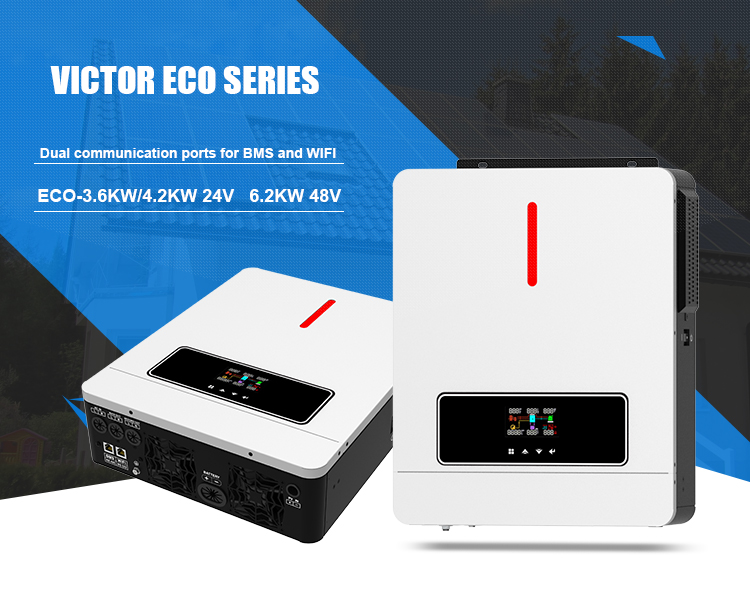
To put this into a practical engineering perspective, consider the specifications required for a robust residential setup. High-performance units today are engineered as 3-6KW systems featuring ultra-wide 60-450VDC photovoltaic input ranges. Coupled with a massive 120A MPPT controller, this specific architecture allows the system to wake up earlier at dawn and stay active later into the dusk. It harvests maximum power even during low-light conditions. Furthermore, providing a stable 110V to 120V alternating current output ensures seamless integration with standard household breaker panels. Operating on a 24V battery system framework, these specifications represent the exact sweet spot for modern residential resilience.
Properly sizing your equipment involves precise engineering calculations rather than simple guesswork. Every unit has a strictly defined maximum alternating current output capacity, measured in kilowatts. However, established industry best practices dictate that the total direct current capacity of the rooftop solar panels should actually exceed the maximum output capacity of the conversion hardware. This deliberate oversizing is known as the DC-to-AC ratio.
A meticulously optimized residential system typically features a ratio hovering between 1.15 and 1.25. For instance, an installer might pair a 6 kilowatt solar array with a 5 kilowatt conversion unit. This configuration means the system might slightly limit a negligible amount of power during the absolute peak noon hours of a flawless summer day. In exchange, it guarantees that the hardware operates at a much higher, more efficient capacity during the early mornings, late afternoons, and throughout the overcast winter months.
At their core, photovoltaic panels are unidirectional power plants. They inherently generate direct current from the moment sunlight strikes their surface. Yet, the modern homes we live in and the appliances we rely on are fundamentally built around the oscillating rhythm of alternating current. Bridging this profound technological gap requires highly sophisticated hardware that does much more than simply flip the flow of electricity.
From maximizing daily energy yields through algorithmic tracking to managing complex battery storage systems during grid failures, this critical equipment serves as the unquestionable brain of your renewable energy ecosystem. Selecting the correct topology is a decision that will dictate the safety, efficiency, and financial viability of your solar investment for decades to come. By carefully evaluating your household energy demands and prioritizing high-efficiency ratings with wide input parameters, you can ensure your home captures every available drop of sunshine. When you are ready to design a robust, future-proof energy system, exploring professional-grade solutions is your next step. You can find high-efficiency equipment tailored to your specific load requirements at Nextpower Solar.
Solar panels exclusively produce direct current power. When sunlight hits the photovoltaic cells, it knocks electrons loose, creating a steady, one-directional flow of electrical current. Because standard homes operate on alternating current, this raw direct current must be routed through conversion hardware before it can power your household appliances.
The conversion is an absolute necessity for compatibility and transmission. The entire global supply chain of heavy domestic appliances, from refrigerators to central heating systems, relies exclusively on alternating current. Additionally, alternating current travels much more efficiently over the long distances required in standard household wiring. Attempting to transmit low-voltage direct current throughout a large house would cause severe voltage drops and require prohibitively thick copper wiring.
Yes, but this is only feasible if you are operating a purely direct current coupled electrical system. Such configurations are commonplace in 12V or 24V environments like recreational vehicles, marine vessels, or remote telemetry stations where the panels directly charge a battery bank. If you intend to power standard residential appliances, overhead lighting, and HVAC systems, incorporating conversion hardware is an unavoidable technical requirement.
A standard grid-tied unit is designed to perform one primary task, which is converting direct current from the roof into alternating current for immediate household consumption or grid exportation. In contrast, a hybrid model is a highly complex, multi-functional energy hub. It executes the standard conversion while simultaneously utilizing integrated charge controllers and automated transfer switches to manage localized battery storage. This provides isolated backup power during municipal grid failures.
All chemical energy storage solutions, including advanced lithium-iron-phosphate and traditional lead-acid solar batteries, strictly store power in the form of direct current. When your household appliances demand energy from this battery bank, the stored power must first be routed through your conversion hardware to be synthesized into usable alternating current before it ever reaches your main electrical breaker panel.
Microinverters offer distinct performance advantages for roofs characterized by complex geometry, multiple facing angles, or severe partial shading issues. Because they execute the conversion at the back of each individual panel, a shaded module will not suppress the output of the surrounding array. Conversely, central string systems are generally more cost-effective, vastly easier to service since they are mounted at ground level, and highly efficient for simple, unshaded, south-facing roof planes.
Even in a completely isolated off-grid scenario, the vast majority of commercially available appliances are heavily engineered to operate exclusively on alternating current. The standalone conversion unit is strictly required to draw the raw energy out of your battery bank and meticulously transform it into the specific voltage and frequency necessary to operate these standard devices without causing electrical damage.