
 English


Views: 0 Author: Site Editor Publish Time: 2026-09-03 Origin: Site


Extended periods of poor weather inevitably drain solar battery banks. When heavy rain, snow, or thick cloud cover persists, relying on a secondary power source becomes an operational reality. You cannot simply wire a fuel-based generator directly into a DC battery bank. Doing so is highly inefficient and carries a massive risk of hardware damage. The core technical challenge lies in safely routing high-voltage AC generator power through your system. You must simultaneously handle household loads and recharge the battery bank without exceeding hardware limits or causing system faults. Modern off-grid energy systems solve this by using the inverter as the central brain. It evaluates incoming AC power, filters out harmful fluctuations, and intelligently distributes the current. Understanding how this internal logic operates prevents generator stalling, protects sensitive electronics, and maximizes fuel efficiency.
Standard standalone inverters perform a single task. They take direct current (DC) from a battery bank and invert it into alternating current (AC) to power standard household appliances. When a generator enters the equation, this one-way street fails. A modern off grid inverter charger operates as a bidirectional power hub. It retains the primary function of inverting DC to AC, but it also features an integrated AC-to-DC converter. This allows the unit to accept incoming AC power from a generator, rectify it into DC, and push it safely into the battery bank.
When a generator powers up and stabilizes, the inverter executes a specific mechanical sequence. You will often hear a distinct click from the unit when this happens. The internal logic board runs through a rapid checklist before allowing any power to flow into the home.
High-end units also feature a power assist function. If a massive load starts up and exceeds the generator's maximum output, the inverter adds battery power to the AC line. This prevents the generator breaker from tripping under heavy surge loads, such as a well pump or air compressor kicking on.
System architecture dictates how these components communicate. Traditional off-grid setups rely on modular components. You mount a separate solar charge controller, a standalone inverter, and a standalone battery charger on a backboard. Each unit operates independently. This requires complex external wiring, heavy-gauge copper runs between multiple DC busbars, and third-party communication hubs to synchronize. Modern all-in-one systems consolidate these functions. The solar input, generator AC input, and battery management protocols all route through a single logic board. This centralization reduces wiring faults, simplifies programming, and allows the system to react to load changes in milliseconds.
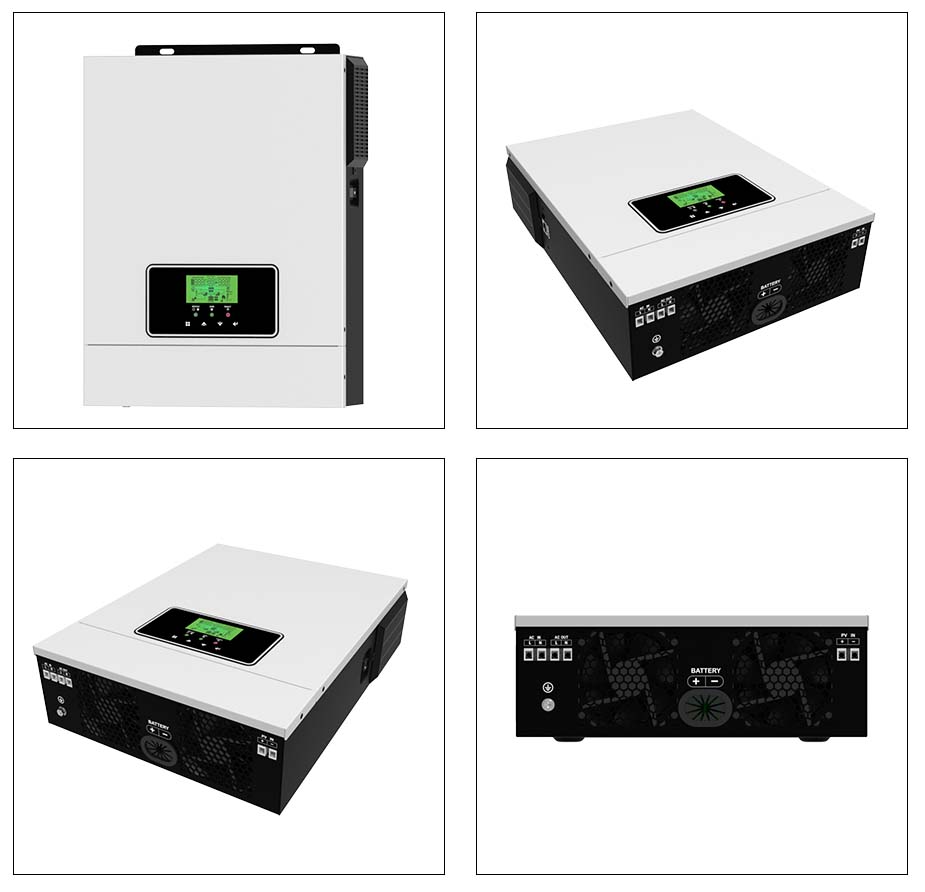
When AC power enters the system, the home off grid power inverter follows a strict operational hierarchy. Immediate household AC loads always take priority over battery charging. The logic board constantly monitors the current flowing through the pass-through relay to the main breaker panel. As long as the household demand remains low, the internal charger operates at maximum programmed capacity.
Dynamic charge throttling acts as the primary defense mechanism against generator stalling. Imagine a scenario where the generator runs smoothly, charging the batteries at 80 amps. Suddenly, a heavy appliance like an HVAC compressor or a 240V deep well pump activates. The sudden surge in AC demand easily exceeds the generator's mechanical limits. Without intervention, the engine bogs down, drops frequency, and stalls. Smart inverters detect this load spike instantly. Within milliseconds, the inverter dials back the AC-to-DC battery charging current. By reducing the charging load, it frees up the necessary AC capacity to start the heavy motor. Once the motor settles into its lower running wattage, the inverter gradually ramps the battery charge rate back up.
Extreme load spikes require even more advanced intervention. If the combined running load of the house exceeds the generator's capacity even with charging reduced to zero, the inverter utilizes load shaving. It pulls DC power from the batteries, inverts it, and synchronizes it with the generator's AC waveform. This combined power output easily starts massive inductive loads without tripping breakers or damaging the generator alternator.
Battery charging relies on residual capacity math. The inverter calculates exactly how much power is available after servicing the house. If you connect a generator capable of producing 5,000 watts of continuous power, and the current household load sits at 2,000 watts, the inverter allocates the remaining 3,000 watts to the internal battery charger. This dynamic allocation ensures the generator operates efficiently under a heavy load. Running a generator at 70% to 80% capacity prevents engine glazing and wet stacking issues, which are common in lightly loaded diesel generators.
The internal charger executes multi-stage charging algorithms to ensure battery longevity. When powered by a generator, the inverter pushes a massive bulk charge to raise the voltage quickly. Once the target voltage is reached, it enters the absorb stage. Here, it holds the voltage steady while the current tapers off. Finally, it drops to a float voltage to maintain the full charge. Running a generator for the long, slow absorb phase wastes fuel. Many off-grid users program the inverter to terminate the generator run early, allowing solar panels to finish the final charging stages the next day.
Weather conditions change rapidly on a job site or remote homestead. A heavy morning overcast might necessitate a generator run, but the sun often breaks through the clouds hours later. When this happens, a premium Off Grid Solar Inverter coordinates its internal AC charger with the DC MPPT solar charge controller to blend power sources.
Source blending prevents power conflicts. As solar yield increases, the MPPT controller pushes more DC current into the battery bus bar. The inverter's logic board detects this incoming solar energy and proportionally reduces the AC charger's output. This logic drastically reduces the physical load on the generator engine, saving fuel and reducing noise. Once the solar array produces enough wattage to carry the household load and maintain the battery charge rate, the inverter signals the generator to shut down entirely.
Hardware protection requires manual intervention during the initial system setup. Users must program the maximum AC draw limit into the inverter interface. This setting tells the inverter exactly how much power the connected generator can safely provide on a continuous basis. You cannot rely on factory defaults. The inverter has no way of knowing whether you connected a massive 12kW standby unit or a small 2kW portable inverter-generator.
Setting this limit prevents catastrophic overloads. If you fail to program the AC input limit, the inverter will attempt to demand maximum charge current while simultaneously passing through maximum load current. A 5kW inverter might try to pull 6,000 watts from a 3,000-watt generator. The generator's internal breaker will trip immediately, cutting all power to the house and halting the charging process. Proper configuration ensures the inverter respects the physical limitations of the external power source.
Manual generator operation becomes tedious during extended winter storms. Auto-Generator Start (AGS) functionality automates the entire process. The inverter utilizes internal relays to send a start signal to a compatible generator when battery reserves run low. This requires specific hardware, typically a two-wire dry contact relay on the inverter wired directly to the generator's remote start terminals using 16 AWG or 18 AWG signal wire.
The reliability of AGS depends entirely on the trigger parameters programmed into the software. Older systems rely on voltage-based triggers. The inverter starts the generator when the battery voltage drops below a specific threshold for a set amount of time. This method is highly inaccurate under load. A heavy appliance turning on causes a temporary voltage sag, which tricks the inverter into starting the generator unnecessarily. Modern setups utilize State of Charge (SoC) triggers. The inverter communicates directly with the lithium battery's Battery Management System (BMS) via closed-loop data cables. The generator only starts when the actual battery capacity drops to a precise percentage, eliminating false starts and optimizing fuel consumption.
Connecting a generator to an inverter is not always a smooth process. Total Harmonic Distortion (THD) represents the most common failure point in generator-inverter integration. Standard construction-grade generators produce dirty power. The AC waveform is jagged, and the frequency fluctuates wildly as the engine load changes. Pure sine wave inverters are highly sensitive to these fluctuations.
The inverter constantly monitors the incoming AC voltage and frequency. If the generator's output drifts outside a narrow acceptance window, the inverter's phase-locking loop circuit cannot synchronize. The inverter immediately opens the transfer relay, rejecting the connection to protect the home's sensitive electronics. You will hear the relay click open, and the charging will stop. To mitigate this risk, off-grid systems require high-quality inverter-generators or heavy-mass synchronous generators that produce clean power with less than 5% THD. If you must use a lower-quality generator, some inverters feature a wide AC input setting that relaxes the frequency tolerances, though this passes dirtier power through to your appliances.
The inverter's maximum charging amperage must align perfectly with the battery bank's chemistry. You cannot force energy into a battery faster than its internal resistance allows. The type of battery dictates how long the generator must run to achieve a full charge.
| Performance Metric | Lead-Acid Battery Bank (AGM/Flooded) | LiFePO4 (Lithium) Battery Bank |
|---|---|---|
| Charge Acceptance Rate | Low (Typically C/10 to C/20). Cannot accept massive currents without overheating. | High (Often up to 1C). Can absorb massive amperage instantly. |
| Generator Run Time | Long. Requires hours of low-load running to complete absorption and float phases. | Short. Accepts maximum bulk charge until nearly 100% full, then stops. |
| Fuel Efficiency | Poor. Generator spends hours running at low efficiency during final charge stages. | Excellent. Generator runs at optimal high load for a short duration, then shuts off. |
| Inverter Configuration | Requires strict temperature compensation and multi-stage voltage programming. | Requires flat voltage profiles and closed-loop BMS communication for safety. |
Lead-acid batteries demand a slow, methodical charge. If the inverter pushes too much current, the batteries boil and degrade rapidly. This forces the generator to run for extended periods at low loads, wasting fuel. Lithium iron phosphate (LiFePO4) batteries change the math entirely. They accept massive charge currents safely. An inverter paired with a lithium bank can run the generator at 80% capacity, dumping huge amounts of energy into the batteries in a fraction of the time. This drastically reduces engine hours and maintenance intervals.
Connecting a generator to an off grid inverter charger requires strict adherence to electrical codes. The physical connection method depends on the generator type. Standby generators are hardwired directly to the inverter's dedicated AC input terminals using heavy-gauge conduit. This provides a permanent, weather-tight connection capable of handling maximum continuous amperage.
Portable generators require a different approach. You cannot simply plug a portable generator into a wall outlet. The safe method involves installing a dedicated generator inlet box on the exterior of the building.
Proper sizing prevents operational bottlenecks. A common mistake involves buying a generator based solely on the size of the inverter. For example, buying a 5kW generator for a 5kW inverter often leads to system failures. The decision framework requires calculating the home's base load plus the maximum charge rate of the inverter.
| Load Component | Wattage Calculation Example |
|---|---|
| Continuous House Load | 2,000 Watts (Lights, Refrigerator, Well Pump) |
| Max Battery Charge Rate | 3,000 Watts (60 Amps at 50 Volts DC) |
| Total Required Power | 5,000 Watts |
| Recommended Generator Size (20% Overhead) | 6,000 Watts Continuous Rating |
If your home draws 2,000 watts continuously, and your inverter's maximum battery charge rate demands 3,000 watts of AC power, you need a generator capable of sustaining 5,000 watts continuously. Adding a 20% overhead margin brings the recommended generator size to 6,000 watts.
Oversizing carries its own risks. Running a massive 15kW diesel generator to power a 2kW battery charger causes wet stacking. Unburned fuel accumulates in the exhaust system because the engine never reaches optimal operating temperature. Conversely, an undersized generator constantly triggers the inverter's overload protections, resulting in dropped connections and dead batteries. Sizing must strike a balance between maximum charge acceptance and minimum base loads.
Electrical safety relies on proper grounding, which becomes complicated when integrating portable generators. The technical safety risk revolves around floating neutrals versus bonded neutrals. Electrical code mandates that a power system can only have one neutral-to-ground bond. In an off-grid system, this bond typically occurs inside the main breaker panel or inside the inverter itself.
Most portable generators come from the factory with a bonded neutral to protect users on job sites. If you connect a bonded-neutral generator to an off-grid system that already has a neutral-to-ground bond, you create a ground fault loop. Objectionable current flows across the ground wire, creating a shock hazard and causing GFCI breakers to trip constantly. To resolve this, the portable generator must be modified to a floating neutral configuration before connecting it to the inverter. This usually involves removing the alternator cover and disconnecting the jumper wire between the neutral lug and the ground lug. Standby generators are usually ordered with floating neutrals specifically for this reason. Always verify the bonding configuration with a multimeter by running a continuity test between the neutral and ground pins before energizing the system.
A: No. Inverters require stable, clean power to synchronize. Cheap construction generators often produce high Total Harmonic Distortion (THD) and fluctuating frequencies. If the power is too dirty, the inverter's protection circuits will reject the connection to protect your appliances. You need an inverter-generator or a high-quality synchronous generator with under 5% THD.
A: Yes. Modern units use an AC pass-through mechanism. When the generator runs, the inverter routes power directly to the household breaker panel first. Any remaining generator capacity is simultaneously routed to the internal AC-to-DC charger to replenish the battery bank.
A: If the generator is too small, the combined load of the house and the battery charger will overload it. The engine will bog down, voltage will drop, and the inverter will disconnect. You must manually program the AC input limit in the inverter settings to restrict how much power it draws.
A: Advanced inverters perform source blending. The system detects the incoming DC power from the solar charge controller and automatically reduces the load on the AC battery charger. This prioritizes free solar energy, reduces the physical strain on the generator, and saves fuel until the generator shuts down.
A: Inverters use Auto-Generator Start (AGS) relays connected to the generator's remote start terminals. The inverter triggers the start signal based on programmed parameters, such as the battery voltage dropping below a specific threshold or the State of Charge (SoC) percentage communicated by a lithium battery BMS.
A: Inverter rejection usually stems from frequency drifting under load or severe voltage spikes. Pure sine wave inverters have narrow acceptance windows. If your generator's engine surges or bogs down, the Hz output changes, causing the inverter to drop the connection to protect your home's electronics.
A: Yes, but the generator does not charge the batteries directly. The generator powers the inverter's internal charger. You must program the inverter with a specific lithium charge profile, utilizing a flat voltage curve and no equalization phase, to safely push the DC current into the lithium battery bank.