
 English


Views: 0 Author: Site Editor Publish Time: 2026-06-30 Origin: Site


Investing in modern power solutions involves high capital expenditure and significant technical complexity. You cannot afford to rely on guesswork or basic marketing brochures. Choosing the right system requires moving past these superficial marketing claims. Instead, you must carefully evaluate your specific load profiles, underlying chemical constraints, and critical lifecycle metrics. Without a solid technical strategy, you risk undersizing your battery. You might experience frustrating system failures during critical outages. You could even void your warranty prematurely by misusing the equipment. We will break down exactly how to evaluate and right-size your next installation. You will learn to match battery chemistry directly to your exact goals. We will decode complex performance specifications into actionable metrics. You will also learn to mitigate long-term implementation risks effectively. Let us dive into the comprehensive framework you need. You will make a truly informed decision today.
Every successful project begins by defining clear operational goals. You cannot install a universal battery. Different applications place entirely different stresses on Energy Storage Systems. Establishing your primary intent dictates every subsequent hardware choice.
Many users prioritize keeping critical loads running during intermittent grid outages. Here, you must focus on rapid switchover times. The system needs high continuous power ratings. These specifications guarantee your essential appliances stay online seamlessly. If the grid fails, a properly sized system activates in milliseconds. You will barely notice the transition.
Utilities often charge peak rates during evening hours. You can bypass these expensive charges by discharging your battery. This daily cycling strategy demands exceptionally high cycle life. You also need excellent round-trip efficiency. High efficiency maximizes your overall financial returns over the system lifespan.
Leaving the utility grid completely requires multi-day autonomy. You must size the battery for maximum overall capacity. Weather resilience becomes absolutely vital here. Your system must integrate tightly into generation sources. Typical sources include large solar arrays or residential wind turbines.
Businesses frequently face steep utility demand charges. Facilities manage these exorbitant costs using rapid discharge capabilities. This application relies heavily on intelligent energy management system (EMS) software. The software predicts sudden consumption spikes accurately. It deploys stored power instantly to flatten the facility load profile.
Best Practice: Establish one primary objective. Mixing too many goals often creates an oversized, inefficient design. Focus on your largest pain point first.
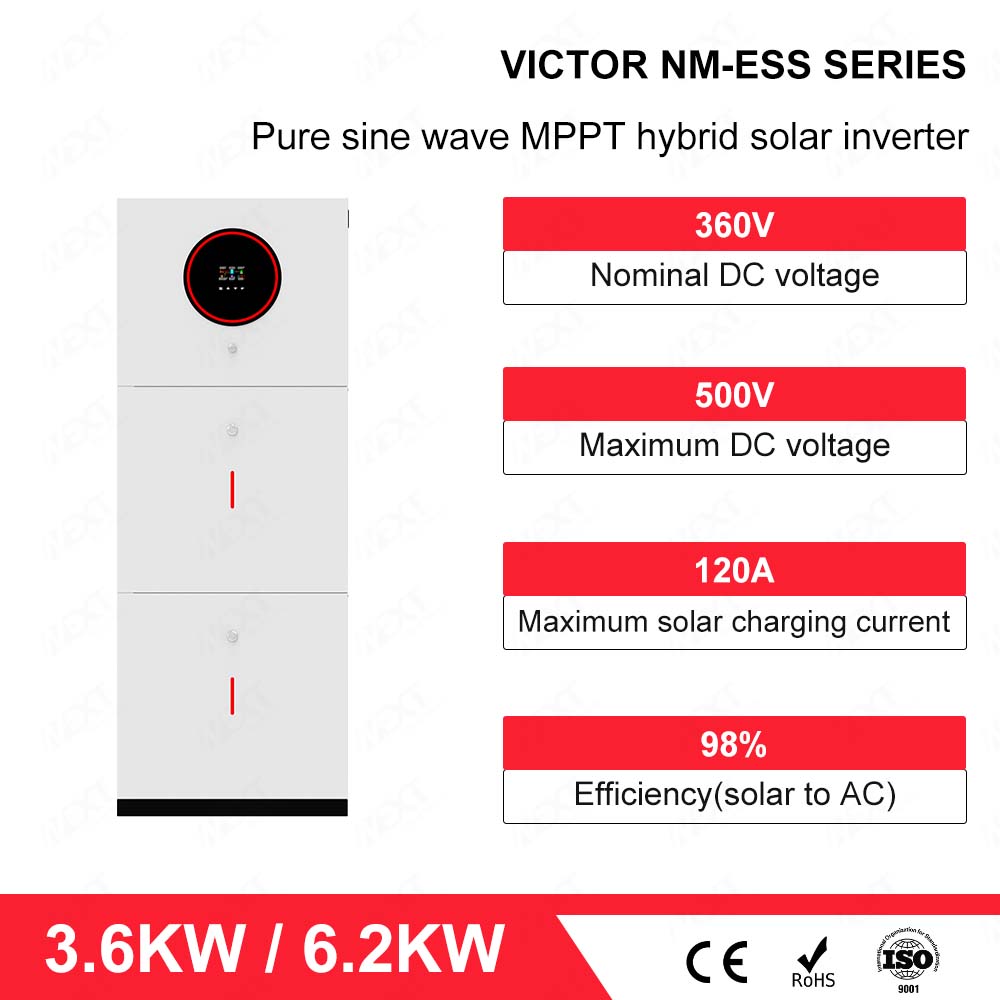
Selecting the right internal chemistry is crucial. You must look beyond simple brand names. The underlying chemical makeup dictates safety, longevity, and physical size. We evaluate the three most common chemistries below.
LFP chemistry dominates the modern stationary market. It offers the highest thermal stability available today. This stability translates directly to exceptional fire safety. You also gain the longest cycle life. Manufacturers typically rate these units for 6,000 or more cycles. Furthermore, LFP allows near 100% depth of discharge (DoD).
NMC batteries excel in specific scenarios. They pack enormous energy into a small space. This high energy density reduces the overall physical footprint significantly. However, NMC chemistry carries certain drawbacks. It features a faster degradation curve than LFP. It also requires stricter thermal management systems to prevent overheating.
Lead-acid remains relevant for specific niche applications. It provides the lowest upfront cost. The materials are highly recyclable worldwide. They also boast proven reliability in extreme cold climates. Unfortunately, you must strictly limit usable capacity. Discharging past 50% DoD causes rapid degradation. They inherently possess a much shorter lifespan.
| Chemistry Type | Safety Profile | Cycle Life | Ideal Application |
|---|---|---|---|
| LFP | Excellent (High Thermal Stability) | 6,000+ Cycles | Daily Cycling / Residential Backup |
| NMC | Moderate (Requires Thermal Management) | 3,000 - 5,000 Cycles | Space-Constrained Installations |
| Lead-Acid | Good (No Thermal Runaway Risk) | 300 - 1,000 Cycles | Infrequent Backup / Budget Builds |
Common Mistake: Choosing a battery based solely on upfront cost. Lead-acid seems cheap initially. However, it requires frequent replacements due to its limited cycle life.
Understanding technical datasheets separates successful installations from expensive failures. You must grasp four core performance specifications. They dictate your long-term success directly.
Designing a Home Energy Storage System demands precise calculations. Guesswork inevitably leads to system crashes. You need a structured approach to match equipment to your daily lifestyle.
You must categorize all household loads systematically. We separate them into distinct priority levels. Critical loads include refrigeration, medical devices, and well pumps. You cannot survive comfortably without them. Non-critical loads include HVAC units, electric ovens, and pool pumps. You should exclude non-critical loads during extended outages.
| Load Category | Appliance Example | Backup Priority | Power Draw Profile |
|---|---|---|---|
| Critical | Refrigerator, CPAP Machine, Well Pump | Must-Have | Low to Moderate (Surges possible) |
| Essential | Lighting, Internet Router, Laptop Charger | High | Very Low |
| Non-Critical | Central Air Conditioner, Hot Tub, Electric Dryer | Ignore during outage | Extremely High |
Motor-driven appliances create massive startup electrical spikes. You must factor in the Locked Rotor Amps (LRA) of your equipment. A well pump might draw 2kW continuously. However, it requires 8kW briefly to start. Ignoring these startup spikes causes severe system overloads. Your inverter will detect the overload and shut down immediately.
You must determine the specific multiplier needed for regional weather realities. A sunny desert location might only need one day of backup. A cloudy northern region requires sizing for 2 or 4 days of minimal solar recharge. Evaluate your historical winter weather patterns realistically.
You must select an optimal integration framework. Choose AC-coupled designs for easy retrofitting to existing solar arrays. It requires fewer invasive electrical changes. Conversely, select DC-coupled architectures for higher overall efficiency in brand-new builds. It minimizes unnecessary power conversion steps.
Hardware represents only half of the equation. You must also navigate compliance standards and hidden legal terms carefully. Ignoring these elements introduces severe implementation risks.
Local building inspectors demand strict adherence to safety protocols. You must verify UL 9540 (Energy Storage System Safety) compliance. You must also verify UL 1973 (Battery Safety) compliance. These rigorous standards ensure maximum fire safety. They guarantee your system will pass local permitting seamlessly. Non-compliant hardware often creates uninsurable fire hazards.
Marketing brochures highlight impressive 10-year lifespans. However, you must expose common exclusions hidden inside the warranty document. Manufacturers heavily restrict operational conditions.
Hardware relies entirely on intelligent software to function properly. You must assess the reliability of the system's Energy Management System (EMS). Evaluate its ongoing compatibility with third-party inverters. You should also check integration capabilities with smart home breaker panels. A closed ecosystem often restricts your future expansion options.
We can summarize the decision pathway simply. You must audit your loads first. Then, you choose the appropriate chemistry. Next, you define your performance specifications clearly. Finally, you verify all compliance standards. You now possess a reliable framework to evaluate your options objectively.
Always request competitive quotes based strictly on usable kWh. You must also demand continuous kW output figures rather than flashy marketing labels. This approach eliminates misleading comparisons easily. A successful installation balances power, capacity, and extreme reliability gracefully.
Do not leave your energy security to chance. Consult a certified local installer today. Have them perform a highly site-specific load analysis for your property.
A: Yes, you can easily integrate a battery. AC-coupling is the best method for existing solar arrays. It retrofits seamlessly without replacing your current grid-tied inverter. Conversely, DC-coupling works better for brand-new installations. It captures solar energy directly before converting it, offering slightly higher efficiency. Always verify compatibility before purchasing.
A: It depends heavily on your consumption. A typical home draws a continuous baseline load of 1 to 2 kW. Under these conditions, a fully charged 10kWh battery lasts roughly 5 to 8 hours. Running heavy appliances like air conditioners depletes this capacity much faster. Carefully managing critical loads extends your backup window significantly.
A: Modern lithium-based batteries require zero physical maintenance. They do not need watering or terminal cleaning. However, traditional lead-acid options demand regular upkeep. You must check electrolyte levels periodically. All smart batteries do require occasional software updates. These updates optimize the energy management system and ensure maximum efficiency.
A: The system safely disconnects from the utility grid. This process is called islanding. An automatic transfer switch blocks electricity from flowing backward into power lines. It protects utility workers repairing the grid. The battery then takes over seamlessly. It powers your designated critical load panel until the grid stabilizes.