
 English


Views: 0 Author: Site Editor Publish Time: 2026-09-19 Origin: Site


Demand charges often account for 30% to 50% of a commercial facility’s monthly electricity bill. This makes peak load management a strict financial priority for industrial operations. Standard grid-tied solar setups generate power based on irradiance, which rarely aligns perfectly with sudden industrial load spikes. Heavy machinery startup, HVAC cycling, and manufacturing shifts create massive power draws. Without the right power conversion and storage strategy, operations remain fully exposed to peak demand penalties.
Mitigating these costs requires moving beyond basic grid-tied systems. Evaluating how a Commercial Solar Inverter manages load transients, integrates with battery storage, and maintains power quality is the foundational step in designing a resilient energy infrastructure.
Effective energy management requires establishing a hard baseline goal. Facilities must flatten their overall load profile to avoid triggering utility demand penalties. You must achieve this while maintaining uninterrupted operational capacity on the factory floor. Success is measured by the hardware's ability to monitor grid consumption in real-time and inject stored energy exactly when demand threatens to exceed predetermined thresholds. A properly configured system operates invisibly. Production lines continue running without voltage sags. Facility managers see a predictable, flattened curve on their monthly utility statements. The primary objective is shifting from passive energy generation to active, automated load control.
Industrial environments experience sudden, massive power requirements. Analyzing the impact of inrush currents is a mandatory step for proper system design. When heavy industrial motors, large-scale compressors, or heavy manufacturing equipment start, they draw a transient current. This Locked Rotor Amp (LRA) draw can be up to six times their standard Running Load Amps (RLA). These micro-events compound across a facility grid. If an HVAC chiller cycles on exactly when a manufacturing line powers up, the combined draw creates a severe spike. Identifying these overlapping events requires granular sub-metering at the switchgear. Engineers map the exact duration and amplitude of these spikes to specify hardware capable of absorbing the transient load without tripping internal breakers or defaulting to grid power.
Utilities do not just charge for the total volume of electricity consumed. They heavily penalize the speed at which you draw it. Utilities typically calculate peak demand based on 15-minute rolling intervals. If a facility draws a massive amount of power for just one 15-minute window during a 30-day billing cycle, the utility sets the demand charge based on that single peak. This structure drastically alters the financial return of energy hardware. Implementing a system capable of shaving these peaks yields immediate financial returns. By capping the maximum draw from the grid, facilities reduce their utility bills substantially. Your total kilowatt-hour consumption remains identical, but the peak penalty disappears. The hardware investment pays for itself by neutralizing these specific 15-minute penalty windows.
Power quality directly impacts equipment lifespan. Evaluating an inverter's ability to supply clean 3-phase power is a mandatory engineering step. Industrial facilities rely on sensitive electronics, including Computer Numerical Control (CNC) machines and Variable Frequency Drives (VFDs). These devices require smooth, uninterrupted sine waves to function correctly. A robust commercial solar inverter must maintain a Total Harmonic Distortion (THD) strictly below 3%. High THD introduces electrical noise. This noise manifests as excess heat in motors, premature bearing failure, and erratic microprocessor behavior. Factory-grade inverters utilize advanced digital signal processing and heavy-duty filtering chokes to clean the power output. This ensures that transient loads do not corrupt the facility's internal microgrid.
The internal architecture of the inverter determines its physical resilience to industrial stress. Facilities must choose between two primary topologies based on their specific load profiles.
| Specification | Low-Frequency Architecture | High-Frequency Architecture |
|---|---|---|
| Surge Capacity | Up to 300% for 5-10 seconds | Typically 150% for milliseconds |
| Physical Weight | Heavy (requires reinforced structural support) | Lightweight (often wall-mountable) |
| Ideal Application | Heavy machinery, motors, compressors | Lighting, servers, stable continuous loads |
| Transformer Type | Large copper/iron core | Small ferrite core / Transformerless |
| Thermal Tolerance | High (absorbs heat spikes well) | Low (relies heavily on active fan cooling) |
Facilities experiencing extreme fluctuations in power consumption often require high-voltage architectures. Stepping up the DC string voltage and the AC output voltage minimizes transmission losses across large industrial campuses. Higher voltage means lower current for the exact same power delivery. Lower current reduces the thermal stress on wiring, busbars, and internal inverter components. This principle is critical when managing sudden peak demands. A high-voltage system pushes a massive surge of power to a starting motor with significantly less voltage drop and heat generation than a standard low-voltage system. This efficiency ensures that the energy dispatched during a peak event reaches the load instantly and without unnecessary thermal waste.
Inverter performance is not static. Analyzing inverter efficiency curves reveals how hardware behaves under different operational stresses. Peak efficiency typically occurs in the broad middle of the operating range, usually between 40% and 80% of the unit's rated capacity. Commercial facilities do not operate at peak capacity 24/7. Decision-makers must address the reality of low-load weekend or night shifts. If an inverter is drastically oversized to handle a rare peak event, it may operate at only 10% capacity during off-hours. At this low threshold, efficiency drops precipitously. The inverter wastes generated solar power as heat just to keep its internal components running. Proper system design requires hardware that maintains a flat efficiency curve, ensuring high performance even during prolonged low-load periods.
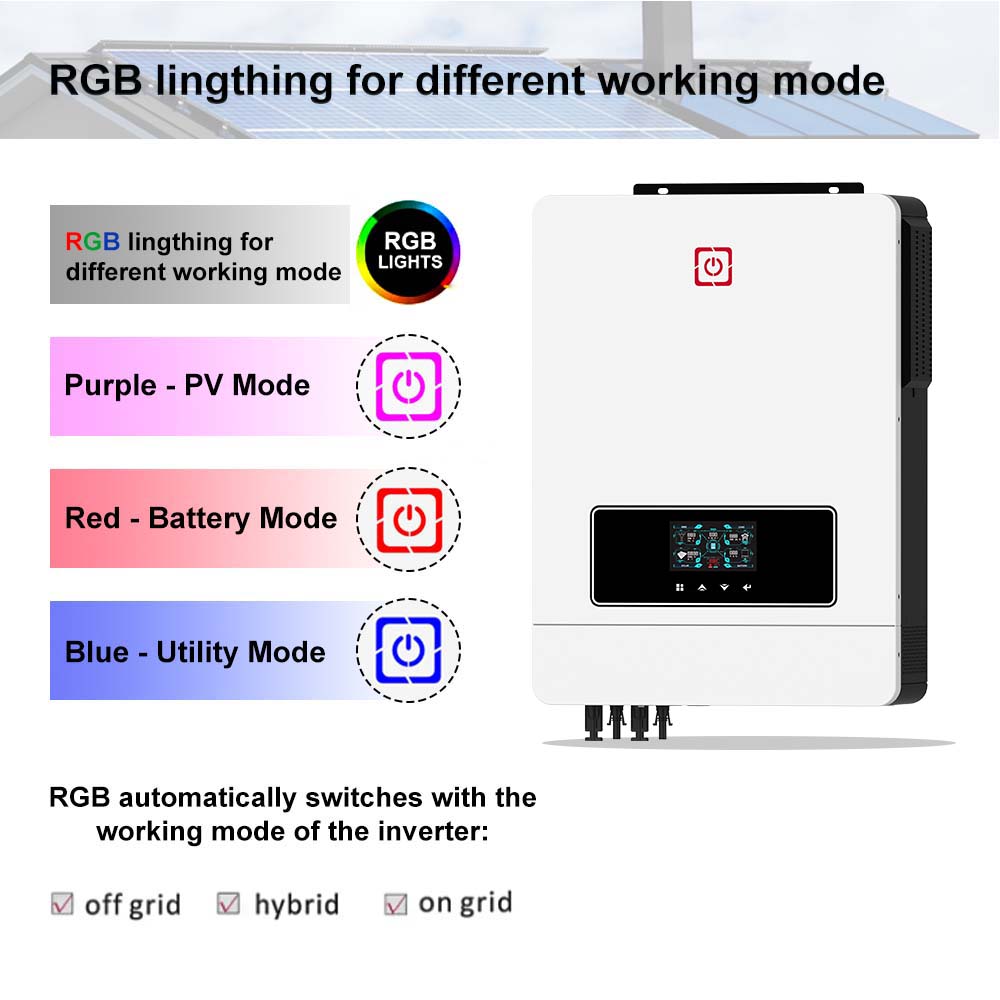
Active peak shaving requires instantaneous communication between the grid, the facility, and the storage medium. A business energy storage inverter serves as the central controller of this operation. Large-scale systems rely on Current Transformers (CTs) installed directly at the main utility feed. These sensors continuously monitor the facility's total draw. You program the dispatch logic with a specific grid threshold. The moment facility consumption approaches this limit, the inverter instantly draws from battery reserves rather than the grid. This process requires sophisticated software algorithms. The system predicts load trajectories and dispatches exact wattage to keep the utility meter perfectly flat below the penalty threshold.
Correctly sizing the hardware prevents unnecessary capital expenditure while ensuring operational safety. Frameworks for calculating the necessary continuous output rating must separate average loads from transient spikes. The most effective strategy involves sizing the inverter's continuous rating to the facility's average daytime load. To handle the spikes, engineers rely on the inverter's short-term surge ratings and active battery dispatch. This approach allows heavy machinery to start without tripping system protections. It keeps the inverter operating in its peak efficiency window during normal hours. Over-sizing the continuous rating just to catch a 5-second motor startup is a common, costly engineering mistake that ruins low-load efficiency.
The speed of power delivery is just as critical as the volume. Assessing the millisecond response time required for the inverter to switch power sources is vital. When a massive load drops onto the facility grid, the utility meter registers it almost instantly. The energy storage inverter must detect this spike, calculate the required offset, and inject stored energy before the utility's 15-minute interval average is significantly impacted. High-performance systems feature extremely aggressive ramp rates. They scale from zero to full output in milliseconds. Sluggish response times result in demand leakage. Short bursts of grid power slip through the system, triggering the exact utility penalties the hardware was purchased to prevent.
Grid outages pose a severe threat to industrial productivity. Evaluating the capability of a high load hybrid inverter to disconnect from the grid is crucial for resilience. This process, known as islanding, must happen instantaneously. When grid voltage drops, the hybrid unit instantly opens its internal contactors. This isolates the facility from the utility. It then sustains critical facility operations using combined solar generation and battery reserves. This transition must occur fast enough (typically under 20 milliseconds) to prevent computers from rebooting and VFDs from faulting. Once the grid stabilizes, the inverter synchronizes its output with utility voltage and frequency before reconnecting.
Beyond peak demand shaving, hybrid architectures excel at energy arbitrage. Utilities increasingly utilize Time-of-Use (TOU) and dynamic pricing models. Electricity costs fluctuate based on grid demand. Facility managers program the hybrid inverter to store excess solar generation during cheap, off-peak morning hours. The system then discharges this stored energy during expensive peak tariff windows late in the afternoon. This algorithmic shifting of energy consumption maximizes the financial return on the solar array. High-end inverters integrate with utility API feeds. They automatically adjust their charge and discharge schedules based on real-time market pricing signals.
Industrial facilities rarely remain static. Power requirements grow as production lines expand. Assessing whether the hybrid inverter architecture allows for future expansion is a critical procurement step. Modular designs permit the addition of parallel units. If a facility adds a new manufacturing wing, technicians install an additional inverter and synchronize it with the existing network. This scalability also applies to the DC side. You can expand battery banks as load profiles grow over time. Investing in a closed, non-scalable system forces a complete hardware replacement when the facility outgrows its initial energy footprint.
Fear of tripping breakers often leads to poor procurement decisions. The financial and operational risks of drastically over-sizing an inverter for rare peak events are substantial. Purchasing a 1-megawatt inverter for a facility that averages 200kW of draw leads to unnecessary upfront capital costs. Furthermore, it results in poor low-load efficiency. When massive inverters run at a fraction of their capacity, their internal parasitic losses consume a disproportionate amount of the generated solar power. Precision engineering requires matching the hardware to the empirical load data. You must utilize battery surge capacity rather than raw inverter continuous output to handle the peaks.
Active load management generates significant heat. Continuous peak shaving and heavy load management accelerate component degradation if the hardware is not properly cooled. Inverters deployed in industrial settings require active cooling systems. They utilize variable speed fans or liquid cooling loops. Furthermore, the physical enclosure must match the environment. Appropriate environmental ratings (such as NEMA 4X or IP65) are mandatory. They protect internal electronics from factory dust, moisture, and corrosive airborne particulates. Failing to account for thermal stress and environmental contamination is the leading cause of premature inverter failure in commercial applications.
Deploying advanced energy hardware requires strict adherence to utility regulations. Navigating utility requirements for advanced inverter functions is a complex engineering task. Modern grid codes mandate that commercial inverters provide reactive power support (Volt-VAR control) to help stabilize local grid voltage. They must also feature frequency regulation capabilities and anti-islanding protections to ensure line worker safety during outages. Procurement teams must verify that the selected hardware carries the appropriate certifications (e.g., UL 1741 SA/SB, IEEE 1547) required by the local Authority Having Jurisdiction (AHJ). Non-compliant hardware will be denied interconnection approval.
A: A high load hybrid inverter simultaneously manages solar inputs, grid connections, and battery storage. It actively dispatches stored power during high-load events to shave peaks. Standard inverters only push generated solar power directly to the load or grid, offering no active control over sudden facility demand spikes.
A: It uses sensors to monitor the facility's total grid draw in real-time. When facility demand approaches the utility's peak penalty threshold, the inverter instantly injects battery power. This offsets the spike, keeping the registered utility grid draw flat and avoiding expensive demand penalties.
A: Low-frequency inverters utilize heavy copper transformers. These physical components tolerate the intense thermal and electrical stress of high inrush currents much better than the lightweight, solid-state components found in high-frequency architectures, resulting in lower failure rates.
A: High-voltage systems significantly reduce transmission losses across large facilities. They handle extreme fluctuations in power consumption better because higher voltage allows for lower current. This reduces thermal stress on wiring and internal components during peak industrial usage.
A: A factory-grade inverter should keep current Total Harmonic Distortion (THD) below 5% generally. For facilities utilizing sensitive electronics, such as CNC machines or Variable Frequency Drives (VFDs), the THD must be strictly maintained below 3% to prevent equipment malfunction.
A: Yes. Inverters operate best in their broad mid-range capacity. If an inverter is massively oversized for peak events, it will run inefficiently during low-consumption hours. Sizing to the average daytime load prevents this poor efficiency drop-off.
A: Yes. Commercial and industrial-grade inverters are natively designed for 3-phase power synchronization. They are specifically engineered to support heavy machinery, large motors, and standard factory infrastructure without causing phase imbalances.