
 English


Views: 0 Author: Site Editor Publish Time: 2026-10-23 Origin: Site


Electricity costs keep climbing relentlessly. Environmental concerns are now front and center for property owners globally. Because of this, millions are switching to renewable energy alternatives. If you are planning this transition, understanding the underlying mechanics of the technology is your first critical step.
Grasping the engineering behind a photovoltaic system is essential for achieving genuine energy independence. It is the only way to permanently lower your monthly utility expenditures. In this practical guide, we break down the physics of solar energy into actionable concepts. Whether you plan to install a traditional grid-tied setup, explore an isolated solution for a remote property, or deploy a battery-backed architecture for maximum resilience, this breakdown equips you with the knowledge to make a confident investment.
Before you mount heavy hardware to your roof, you need to know exactly what you are buying. The terminology surrounding renewable energy often feels overwhelming for first-time buyers. However, the core engineering concepts are surprisingly straightforward.
The term itself combines two distinct scientific roots. Photo means light. Voltaic refers to electricity, named after the pioneering physicist Alessandro Volta. Consequently, this equipment is engineered to generate electrical current directly from ambient light.
Traditional fossil fuel generators rely on burning materials to create steam and spin massive turbines. In contrast, this solid-state technology operates with zero moving parts. It relies entirely on the unique chemical properties of semiconductor materials. This silent generation is precisely what makes the hardware exceptionally durable and virtually maintenance-free out in the field.
A frequent point of confusion is the distinction between photovoltaic and solar thermal applications. Both harness radiation from the sun, but their outputs serve entirely different purposes.
A solar array generates usable electrical current to power your lights, kitchen appliances, and air conditioning units. Conversely, a solar thermal setup is designed strictly to capture heat. Thermal configurations use dark-colored tubes to heat a transfer fluid, supplying domestic hot water or radiant floor heating. If your primary goal is to eliminate your electrical bill, you need photovoltaic technology.
Grasping the underlying physics helps you appreciate the remarkable efficiency of your investment. The journey of converting a beam of sunlight into the electricity that powers your television occurs in four highly efficient stages.
The process begins on your roof. Constructed primarily from highly purified silicon, modern panels sit quietly absorbing ambient sunlight. These silicon wafers are meticulously treated with elements like phosphorus and boron. This treatment creates a positive-negative junction, establishing a permanent electric field within the cell.
When sunlight strikes the panel surface, tiny packets of energy called photons transfer their kinetic energy to the silicon atoms. This transfer knocks electrons completely loose from their atomic bonds. Forced by the built-in electric field, these freed electrons flow in a uniform direction. Conductive metal plates lining the cells collect this flow, creating a Direct Current electrical circuit. Engineers refer to this elegant phenomenon as the Photovoltaic Effect.
While the rooftop panels successfully generate electricity, a technical hurdle remains. The power produced is Direct Current. In a Direct Current circuit, electrons flow in a single, constant direction. Unfortunately, modern homes and the broader municipal utility grid operate exclusively on Alternating Current electricity, where the current rapidly reverses direction.
To bridge this gap, the Direct Current electricity routes directly into a solar inverter. Acting as the central command center, the inverter takes the raw power and rapidly switches its direction to output clean, stable Alternating Current power. Without a high-functioning inverter, the energy generated on your roof remains entirely useless for standard household electronics.
Once the inverter successfully converts the current, the power travels directly to your main electrical breaker panel. From this central hub, the electricity distributes throughout the building wiring, exactly like the power supplied by your local utility company.
This transition is entirely invisible to the homeowner. As you run your washing machine during a sunny afternoon, your home automatically draws from this free, renewable source first. You will not experience any flickering lights or interruptions in service.
In a standard grid-tied configuration, your real-time energy production and your home consumption rarely match perfectly. During peak midday sunlight, your roof often produces significantly more electricity than your property currently requires.
When this overproduction happens, the excess power pushes backward through your utility meter and exports into the public grid. Many local municipalities offer a highly beneficial billing mechanism known as Net Metering. Under this agreement, your utility provider tracks the outgoing electricity and credits your account. Later that night, when your panels are dormant, you simply draw electricity from the grid using those accumulated credits to offset the cost.
A quick glance at recent market data reveals a rapid evolution in how these arrays are manufactured and deployed. Industry analysts note a definitive global shift toward higher-efficiency N-type TOPCon silicon wafers. These advanced cells degrade slower and perform significantly better in high-heat environments compared to older P-type models.
Furthermore, the integration of smart-grid technologies and AI-optimized energy management software is transforming standard residential setups. Modern controllers now utilize advanced Maximum Power Point Tracking algorithms to squeeze every drop of efficiency from the array. This ongoing technological maturation means that today's installations are substantially more resilient and intelligent than those deployed just a decade ago.
A reliable solar power system is not a single product. It is a complex assembly of synergistic components. Selecting premium hardware across the board is absolutely essential for long-term safety and maximum financial return.
The panels are the most visible element of your infrastructure. Today, field engineers generally deploy monocrystalline panels. Cut from a single pure silicon crystal, they offer the highest efficiency rates and feature a sleek, uniform black appearance. Polycrystalline panels are more budget-friendly but require slightly more roof space to generate the equivalent amount of power.
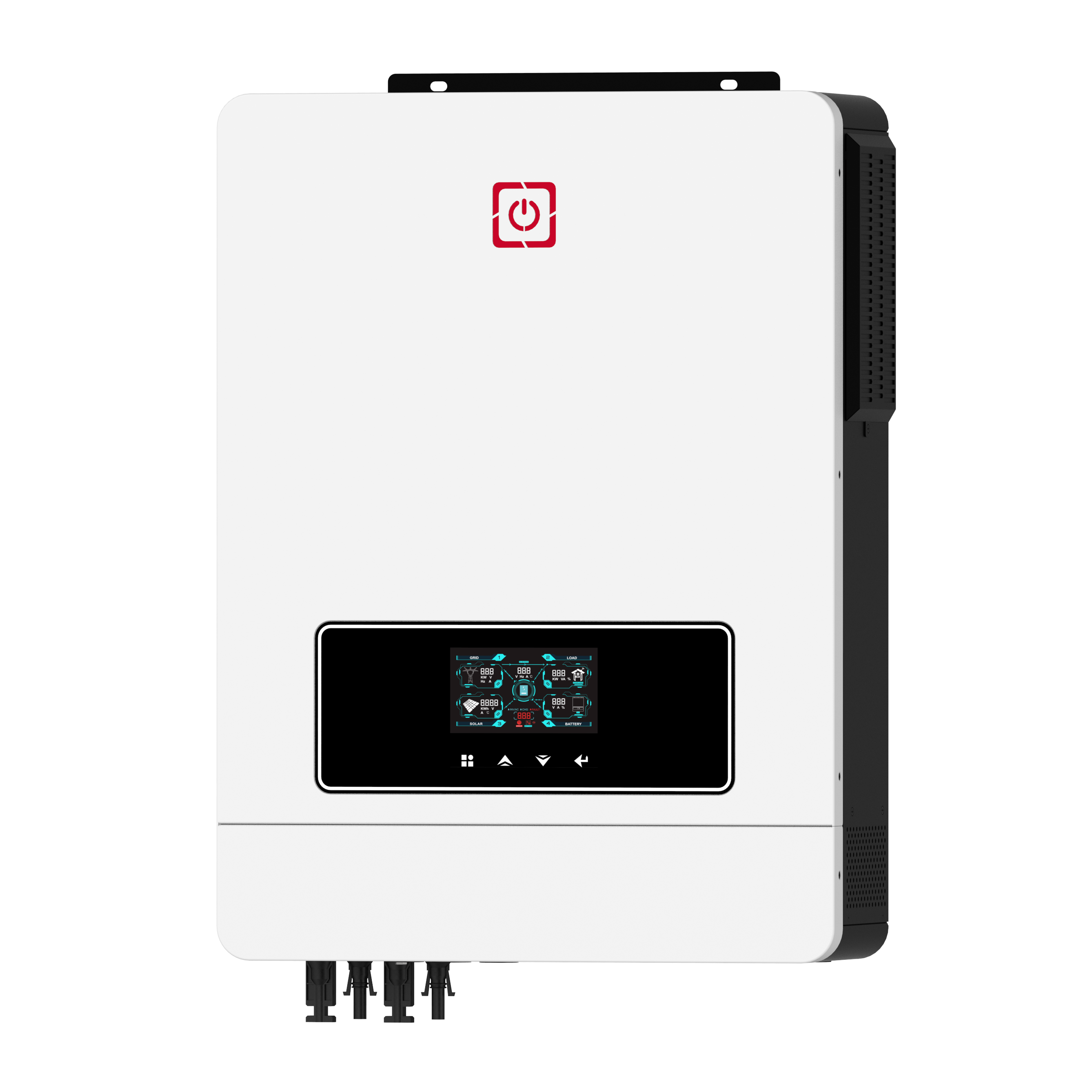
Your choice of inverter technology drastically impacts how your array handles shading and complex roof angles. Modern setups demand robust power management. Specifically, advanced models now feature capacities up to 10.2KW with Dual PV inputs. By utilizing a 160A MPPT ON/OFF Grid Solar Inverter, you can maximize energy harvest from multiple roof angles while seamlessly switching between grid reliance and battery backup.
Battery chemistry has advanced at a staggering pace. The industry standard now heavily relies on highly stable lithium iron phosphate technology. While strictly optional for basic grid-tied setups, integrating deep-cycle energy storage is a non-negotiable requirement if you intend to build an off-grid architecture. These battery banks capture excess daytime production, holding it in reserve to keep your lights on during severe weather blackouts.
Often overlooked during the purchasing phase, the racking hardware physically anchors the heavy glass panels to your property. Roof mounts must be meticulously engineered to penetrate the roofing material safely without causing water leaks. They must simultaneously adhere to strict municipal wind and snow load regulations.
There is no universal approach to renewable energy. The optimal electrical architecture depends entirely on your geographical location, financial budget, and personal desire for energy autonomy. Below is a practical engineering breakdown of your options.
| System Architecture | Grid Connection | Battery Requirement | Grid Outage Behavior |
|---|---|---|---|
| Grid-Tied | Yes | None | System shuts down completely for line worker safety. |
| Off-Grid | No | Massive capacity required | Unaffected. Runs entirely on battery reserves. |
| Hybrid Setup | Yes | Moderate capacity required | Isolates from grid and powers critical loads via battery. |
The vast majority of residential installations fall into this category. These setups are hardwired directly into the local municipal utility grid and do not feature any localized battery storage. They represent the most cost-effective method to slash monthly utility bills. However, due to strict safety regulations designed to protect line workers, a standard grid-tied array automatically shuts down during a neighborhood power outage.
For remote agricultural properties or secluded cabins, an off grid PV system provides total utility independence. Because there is no physical connection to a municipal power grid, this architecture relies heavily on an oversized battery bank and sophisticated charge controllers. While it grants total immunity from rate hikes, the initial capital expenditure is significantly higher.
Bridging the gap between the previous two options, a hybrid photovoltaic system remains connected to the public utility grid but seamlessly incorporates a localized battery storage bank. Modern hybrid inverters act as intelligent traffic controllers. They prioritize powering your home with renewable energy, route excess power to charge the batteries, and finally export any remaining surplus to the grid.
Transitioning away from fossil fuels is driven by a combination of measurable ecological impacts and highly attractive financial incentives. Evaluating the feasibility of a solar energy system requires a close look at immediate utility offsets.
The most immediate benefit is the sharp reduction of operational household expenses. Utility rates historically trend upward, driven by inflation and aging infrastructure maintenance. By generating your own power, you effectively lock in your electricity cost for the operational lifespan of the equipment, creating a powerful hedge against future inflation.
Empirical real estate data consistently indicates that homes equipped with fully owned renewable infrastructure command a market premium. Prospective buyers increasingly value energy-efficient properties that promise predictable, low utility costs. Because the hardware represents a tangible asset that lowers the total cost of homeownership, properties with solar installations frequently experience reduced time-on-market.
The transition to renewable energy is a multi-phase engineering and administrative process. Picture installation day. A team of certified technicians arrives, carefully secures the sleek black panels to your roof structure, and wires them into a compact inverter on the side of your garage. But before that day arrives, several critical steps occur.
The process initiates with a rigorous site audit. Structural engineers evaluate the integrity of your roof rafters, the orientation relative to the sun, and potential shading from nearby trees. Using historical energy consumption data pulled from your utility bills, designers calculate the precise kilowatt size required to meet your demands.
Before physical work commences, the custom design must be approved by the local Authority Having Jurisdiction. This administrative phase involves submitting structural blueprints to municipal building departments. Once installed, the setup must pass a final safety inspection to receive official Permission to Operate from the utility company.
A commercial-grade renewable energy setup is engineered for extreme long-term durability. Industry-standard panels typically carry performance warranties guaranteeing 25 to 30 years of efficient operation. Degradation rates usually fall below 0.5 percent per year. String inverters generally require replacement after 10 to 15 years. With occasional visual inspections, the core infrastructure reliably produces clean energy for decades.
Yes, solar panels continue to generate electricity on heavily overcast days by capturing diffuse ambient sunlight. However, the total energy yield will be noticeably reduced compared to clear summer conditions. Solar cells cannot generate power at night because they require incoming photons to initiate the energy conversion process. For nighttime power, your property automatically draws electricity from the municipal grid or utilizes stored battery energy.
System sizing is highly specific to your historical energy consumption and geographic location. On average, a standard home consumes about 10,000 kilowatt-hours annually. To offset this entirely, engineers typically design a 6 to 8 kilowatt array, which translates to roughly 15 to 20 high-efficiency panels. A professional site audit is required to calculate your exact needs.
When installed by certified professionals using proper flashing and mounting hardware, a solar array will not damage your roof. In fact, the panels act as a protective shield against ultraviolet degradation and severe weather for the portion of the roof they cover. However, if your roof is nearing the end of its lifespan, engineers highly recommend replacing the shingles prior to installing the mounting racks.
From a capital expenditure perspective, yes. An off-grid architecture requires total self-sufficiency. This means you must invest heavily in deep-cycle battery storage and heavy-duty charge controllers. These battery banks must be meticulously sized to power your property through consecutive days of severe winter weather. This massive storage requirement makes the initial hardware costs significantly higher.
Understanding the fundamental engineering of solar power is your first step toward true energy independence. By harnessing clean technology, a properly engineered setup seamlessly powers your daily life while saving you thousands of dollars over its operational lifespan. Hardware quality dictates system longevity. Do not compromise on your foundational components.
To ensure your microgrid performs exactly as engineered, source your equipment from established industry authorities. If you are ready to take control of your energy consumption and insulate yourself from rising utility costs, explore the professional-grade solutions at Next Power Solar. From high-efficiency panels to advanced 10.2KW dual PV hybrid inverters, equip your property with the premium hardware necessary to secure a sustainable future.