
 English


Views: 0 Author: Site Editor Publish Time: 2026-06-16 Origin: Site


Navigating the energy transition requires moving beyond basic awareness of battery technology. Facility managers and developers now face a critical pivot. You must decide exactly which storage architecture aligns best to your specific operational loads. You also must consider evolving grid programs and internal decarbonization targets.
Treating all storage technologies as interchangeable commodities creates massive risk. A mismatched system often leads to stranded capital assets. It also creates misaligned operational expenses. Worse, improper selection can trigger severe non-compliance penalties against local fire codes. The wrong choice damages your bottom line.
This guide provides a commercially focused framework to clarify your options. We will break down major storage technologies by their specific use cases. You will understand their operational constraints and lifecycle costs. Ultimately, you will learn how to evaluate these systems to ensure predictable ROI and regulatory compliance.
Energy storage is not a one-size-fits-all commodity. You cannot simply buy a battery and expect universal results. The specific operational profile dictates the required technology. You might need high power bursts for mere milliseconds. Conversely, you might require steady power discharge over eight hours. These two scenarios demand entirely different hardware.
Defining success criteria is your crucial first step. What makes a deployment successful for your facility? Some operators prioritize predictable returns from peak shaving. Others need seamless microgrid islanding during unexpected grid outages. Still, others focus primarily on meeting strict local emissions mandates. You must clarify these goals before speaking to vendors.
We must also explicitly separate utility-scale geographic solutions from scalable facility solutions. Macro-grid technologies like pumped hydro require specific landscapes. They are irrelevant for individual buildings. Instead, decision-makers must focus on scalable, site-ready Commercial Energy Storage System deployments. These solutions fit within standard property lines and meet local zoning laws.
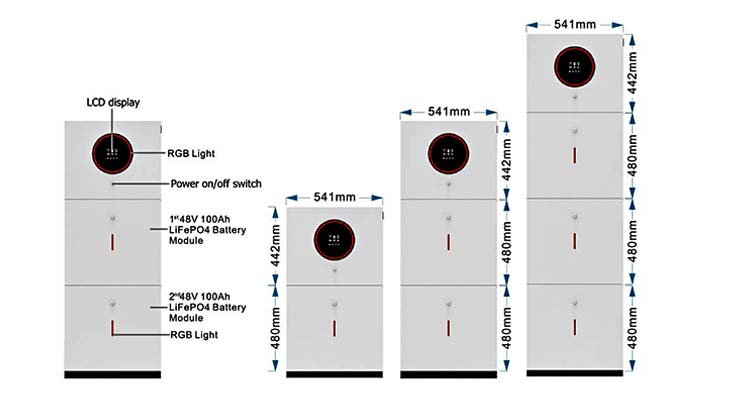
Electrochemical systems dominate the commercial sector. They provide the most practical balance of footprint, cost, and responsiveness. When businesses evaluate Energy Storage Systems, electrochemical options almost always make the final shortlist.
Lithium-ion batteries store energy via reversible chemical reactions. The market relies heavily on two main chemistries. Lithium Iron Phosphate (LFP) offers excellent cycle life and stability. Nickel Manganese Cobalt (NMC) provides higher energy density. Both types dominate modern commercial deployments.
These batteries are best for two- to four-hour duration needs. They excel at demand charge management. They also respond instantly for fast frequency regulation on the grid.
However, you must acknowledge the risks and realities. High energy density brings thermal runaway risks. A single cell failure can propagate rapidly. Therefore, lithium-ion setups require active HVAC management. You must also implement strict, code-compliant fire suppression protocols to protect your site.
Redox flow batteries operate differently. They store energy in liquid electrolytes. Pumps circulate these liquids through a central cell stack. Vanadium redox is the most common commercial variant.
Flow batteries are best for long-duration energy storage (LDES). They shine when you need power exceeding six to eight hours. They also handle heavy-cycling environments beautifully. You can charge and discharge them continuously without damaging the core components.
They offer practically zero capacity degradation over thousands of cycles. But they carry notable downsides. They require a much larger physical footprint. They weigh significantly more than lithium alternatives. They also suffer from lower round-trip efficiency, meaning you lose more power during the charge cycle.
Newer chemistries are rapidly nearing commercial viability. Solid-state and sodium-ion batteries represent the next frontier. They are currently transitioning from pilot phases to early commercialization.
These technologies hold great promise. They aim to mitigate severe lithium supply chain constraints. More importantly, they eliminate highly flammable liquid electrolytes. This shift could drastically simplify fire safety compliance and reduce HVAC requirements in the future.
Mechanical solutions provide massive scale. We frame them here for macro-understanding. However, they are generally ruled out for typical commercial facility procurement. They require unique geographic features or immense capital investments.
Pumped hydro accounts for over 90% of global storage capacity. The mechanism is remarkably simple. It moves water between two elevations. During off-peak hours, pumps push water uphill. During peak demand, water flows down through turbines to generate power.
This technology demands incredibly high capital expenditure. It boasts a decades-long lifespan. However, it is strictly reliant on topology. You cannot build a pumped hydro facility in a flat urban center.
Flywheels store kinetic energy in a heavy, spinning rotor. A motor accelerates the rotor to high speeds. When power is needed, the spinning mass turns a generator.
Commercial applications exist but remain highly specialized. Facilities use flywheels for ultra-fast, short-duration power quality smoothing. They also serve as Uninterruptible Power Supply (UPS) bridge power. They cover the critical 10-to-30-second gap before backup diesel generators start. The major downside is high maintenance due to constant mechanical wear.
CAES systems store highly compressed air inside massive underground caverns. When the grid needs power, operators release the air. The expanding air drives a specialized turbine. This is exclusively a utility-scale solution. It is strictly limited by the availability of suitable geological formations.
| Technology Type | Primary Application | Duration Range | Commercial Viability |
|---|---|---|---|
| Lithium-Ion | Peak Shaving, Microgrids | 2 to 4 hours | High |
| Redox Flow | Long-Duration Shifting | 6 to 12+ hours | Growing |
| Pumped Hydro | Macro-Grid Balancing | 10+ hours | None (Utility Only) |
| Flywheels | Power Quality, UPS | 10 to 30 seconds | Niche |
Some applications require shifting loads over entire seasons. Others focus specifically on decarbonizing heat rather than electricity. Thermal and chemical setups fill these specialized gaps.
Thermal systems store energy as physical heat or cold. Common materials include molten salt, ice banks, and advanced phase-change materials. The system absorbs energy, changes the material's temperature, and holds it.
These systems are best for decarbonizing heavy industrial heating processes. In commercial buildings, ice storage systems are highly effective. They freeze water at night when electricity is cheap. During hot afternoons, the melting ice cools the building. This drastically shifts commercial HVAC loads off-peak.
Chemical storage uses surplus renewable energy to power electrolysis. This process splits water to produce green hydrogen. The hydrogen is then stored in tanks or pipelines for later use.
The realities of this technology are complex. It is excellent for seasonal, long-term storage. You can store hydrogen for months without degradation. However, round-trip efficiency is currently dismal. Efficiency often drops below 40% after converting hydrogen back to electricity. This massive energy penalty makes it commercially unviable for standard daily load shifting.
Selecting the right hardware goes beyond reading a spec sheet. You must match technical capabilities directly to your facility's financial and spatial realities. Missing a single dimension can ruin project economics.
You must rigorously distinguish between power and energy capacity. Power capacity is measured in kilowatts (kW). It dictates how much power the system can discharge at once. Energy capacity is measured in kilowatt-hours (kWh). It dictates how long the system can sustain that power output. A facility needing a massive, brief burst requires high kW. A facility riding out a long outage requires high kWh.
Do not fixate solely on upfront hardware pricing. You must evaluate the Levelized Cost of Storage (LCOS). This metric captures the true operational reality over a 10-to-15-year horizon. You must factor in round-trip efficiency losses. You must calculate parasitic loads, like the constant power draw of battery cooling systems. Furthermore, you must model cycle-life degradation and the cost of buying replacement modules down the road.
Site readiness often dictates your final choice. Energy-dense lithium-ion systems may fit easily into a tight urban footprint or a basement parking garage. Conversely, flow batteries demand massive space. They contain heavy tanks of liquid. They typically require reinforced concrete pads and expansive outdoor space. Always check structural load limits before signing a procurement contract.
Regulatory compliance is non-negotiable. You must navigate strict safety standards. NFPA 855 and UL 9540 govern how these systems are built and installed. Local zoning restrictions heavily influence system choice. Fire marshals require specific spatial separations between battery enclosures and adjacent buildings. If a technology cannot meet local fire codes, it is immediately disqualified from your shortlist.
Even the perfect technology faces real-world deployment hurdles. You must proactively manage integration risks to keep your project on schedule.
Acknowledge the harsh reality of grid interconnection. Utility queue delays can stall a project for months or years. You must apply for interconnection approval long before you pour concrete. Additionally, procurement lead times remain highly variable. Major battery cells face global supply chain bottlenecks. Factor these delays into your project timeline.
Hardware is entirely useless without intelligent software. A battery is only as good as the Energy Management System (EMS) commanding it. Assess how the chosen physical system integrates with your existing software. Does it talk seamlessly to your facility's SCADA system? Can it communicate with your central building management network? Poor software integration ruins peak shaving performance.
To move forward effectively, follow a structured approach. We recommend taking the following steps immediately:
Accurate interval data is the absolute foundation. Without it, you cannot accurately size or select your system.
Technology selection must remain strictly outcome-driven. Avoid chasing technical trends that do not serve your facility's financial or operational goals. Assess your specific load profile, spatial limitations, and safety requirements before ever reviewing hardware costs.
For the vast majority of commercial buyers, the immediate decision centers around optimizing an electrochemical system. Lithium-ion remains the reigning champion for standard two- to four-hour load shifting. However, we strongly advise keeping a close eye on flow batteries. As grid demands shift and long-duration requirements emerge, flow technologies will become increasingly critical.
Start your journey by analyzing your facility's 15-minute load data. Build an accurate LCOS model. Engage local regulators early. By following this disciplined approach, you will deploy a resilient, profitable asset.
A: Lifespan depends on cycle life and calendar life. Lithium-ion systems typically last 10 to 15 years, degrading slightly with every charge cycle. Flow batteries can endure tens of thousands of cycles with minimal degradation, often lasting over 20 years. Facilities often use augmentation strategies—adding fresh battery modules around year seven—to maintain steady energy capacity throughout the project's financial life.
A: It depends entirely on your operational duration. If you need short-duration, high-power bursts for peak shaving (2-4 hours), lithium-ion is superior and requires less space. If you require long-duration, deep-cycling power (8+ hours) without capacity degradation over time, a flow battery is the better choice, provided you have the outdoor space to house it.
A: Round-trip efficiency measures the percentage of energy you actually retrieve from a battery compared to what you put into it. For example, lithium-ion boasts high efficiency (up to 95%), meaning minimal energy is lost as heat. Lower efficiency technologies, like hydrogen storage, waste significant energy during conversion, directly increasing your operational expenses (OPEX).
A: Fire codes, particularly NFPA 855, dictate where you can place batteries. They mandate strict spatial separation rules between battery units and building structures to prevent fire spread. Additionally, they require robust thermal management and fire suppression systems. These regulations often force facilities to choose safer chemistries or abandon specific indoor deployment plans altogether.