
 English


Views: 0 Author: Site Editor Publish Time: 2026-08-13 Origin: Site


Expanding operations inevitably pushes your electrical infrastructure to its absolute limits. Adding new manufacturing lines, industrial HVAC systems, or corporate EV charging fleets creates intense, unpredictable power demands. When your facility outgrows its current electrical service, you face immediate operational roadblocks. Traditional grid upgrades are notoriously cost-prohibitive and structurally inflexible. They are also heavily plagued by long utility lead times, sometimes taking months or even years to complete. Implementing on-site parallel capacity is often the most viable path forward to maintain your growth trajectory.
However, determining the right capacity requires moving beyond analyzing basic monthly energy bills. You must deeply analyze peak transients to ensure continuous system stability. This guide provides a clear engineering framework for sizing parallel power requirements. We will explore how evaluating the right Commercial Solar Inverter infrastructure helps you handle expanding commercial loads securely and effectively. You will learn actionable steps to safeguard your facility against unexpected power disruptions.
First, clearly define your facility's operational growth profile. You must separate linear baseload growth from volatile peak growth. Adding office space, upgrading basic lighting, or expanding computer networks creates a steady, predictable baseload. Conversely, integrating heavy machinery, automated conveyor belts, or large industrial motors causes sharp, volatile demand spikes. Failing to differentiate these two distinct profiles leads to severely undersized parallel systems.
Next, thoroughly address the starting penalty of inductive loads. Equipment like heavy-duty chillers, industrial compressors, and large induction motors requires massive inrush currents to overcome resting inertia. These machines often draw three to eight times their rated running current during the critical first milliseconds of startup. If your parallel system cannot sustain this instantaneous power spike, main safety breakers will trip. This immediately halts production lines and damages sensitive electronics.
Proper facility planning requires strict N+1 redundancy. Establish clear success criteria for your ongoing operations. If your facility requires absolute zero downtime, you cannot safely rely on a single consolidated power source. Parallel capacity must automatically account for the unexpected failure of at least one generating unit. If one module goes offline for maintenance or faults, the remaining units must seamlessly sustain the entire load without causing a cascading system collapse.
Finally, transition your strategy to data-driven auditing. Never rely purely on theoretical spec-sheet maximums provided by equipment manufacturers. We strongly recommend deploying professional power quality analyzers directly at your main service panels. Leave these precise meters active for 14 to 30 days. They accurately capture actual phase-level demands, hidden transient spikes, and critical power factor irregularities. This empirical real-world data forms the undeniable foundation of your new capacity sizing requirements.
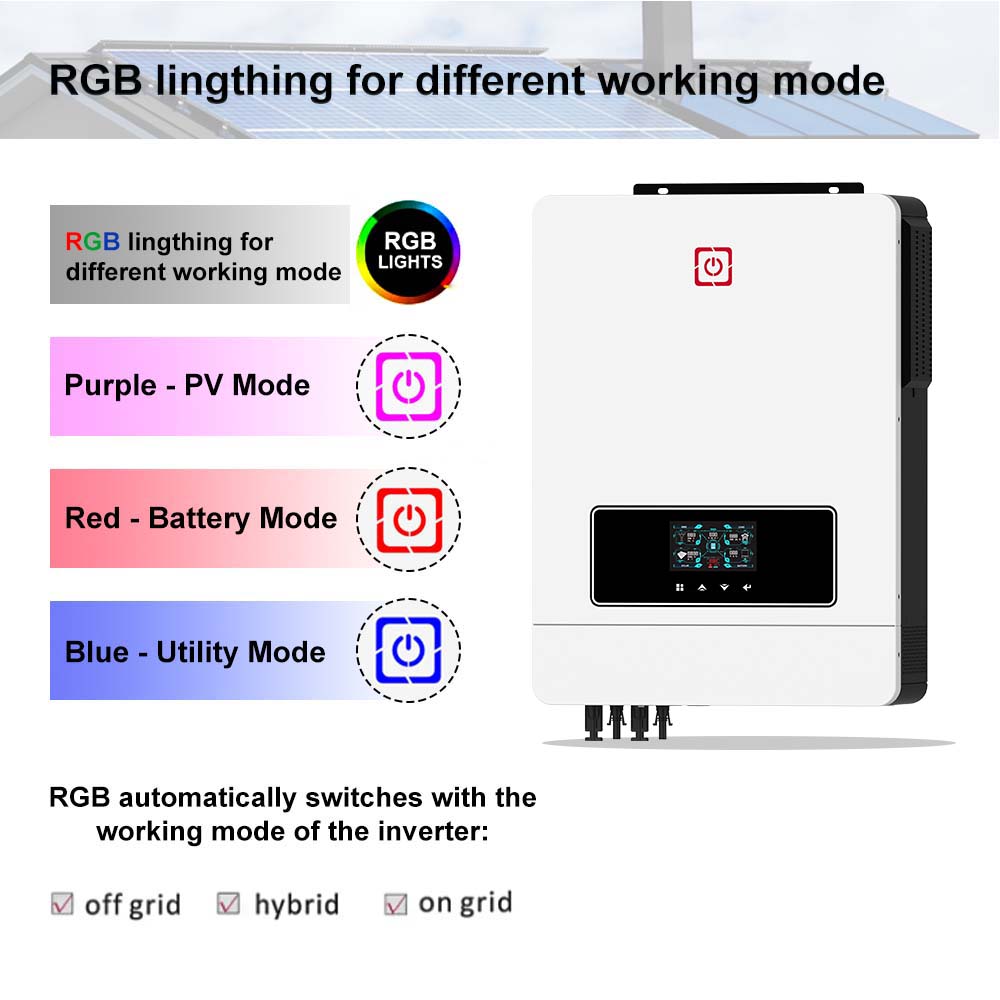
Not all commercial solar equipment handles multi-unit synchronization reliably. You must carefully evaluate how your chosen system balances power across multiple nodes. Active load sharing is vastly superior to passive load sharing. Active systems rely on direct, high-speed communication lines between parallel inverters. They ensure precise, microsecond-level phase synchronization. Without active sharing protocols, dangerous circulating currents can easily develop between units. These rogue currents cause overheating and lead to severe, irreversible hardware damage.
You must also strictly assess microgrid forming capabilities. When external grid power suddenly drops, your equipment needs to respond instantly. A robust commercial solar inverter can seamlessly transition from standard grid-following mode to an independent grid-forming mode. This advanced feature isolates your facility from the dead utility grid. It maintains precise internal voltage and frequency, keeping your critical operational loads fully powered during widespread blackouts.
Next, intensely scrutinize the manufacturer’s stated scalability limits. Most hardware vendors widely advertise parallel capabilities in their brochures. However, you must determine their true maximum unit scalability in real-world deployments. Ask specific engineering questions. Can you parallel up to 10 units safely? Some systems experience severe phase stability degradation after connecting just three or four units together. Real-world scalability ultimately defines your facility's long-term growth ceiling.
Certifications and grid compliance remain strictly non-negotiable elements. Major utilities will absolutely not grant interconnection approval for uncertified, non-compliant hardware. Verify your shortlisted equipment easily meets advanced grid-support function requirements. Look for explicit, up-to-date compliance with strict standards like IEEE 1547 and UL 1741 SA/SB. Additionally, check for regional mandates like California's Rule 21. Compliant inverters provide essential voltage and frequency ride-through capabilities, ensuring total stability for both your localized facility and the broader utility grid.
Industrial environments continually present complex, dynamic electrical challenges. Bridging the significant gap between intermittent solar generation and instantaneous high-power facility needs requires robust, adaptable technology. This is precisely where deploying a high load hybrid inverter becomes strategically essential. These intelligent power units manage both direct current (DC) from panels and alternating current (AC) from the grid simultaneously. They smoothly balance fluctuating renewable generation with your immediate, heavy load demands effortlessly.
Commercial facilities rarely exhibit perfectly balanced power draws across all circuits. You will frequently encounter highly asymmetric loads across your three electrical phases. Heavy single-phase loads like extensive lighting arrays, server racks, and office computers naturally create significant phase imbalances. Standard string inverters struggle immensely and often trip offline under these skewed conditions. You must comprehensively evaluate hybrid units based entirely on their proven ability to handle 100% unbalanced loads securely and continuously.
Furthermore, modern parallel capacity often relies heavily on existing infrastructure integrations. You likely already have heavy diesel or natural gas backup generators permanently installed on-site. The advanced hybrid unit acts as the intelligent master controller. It actively coordinates load sharing with these legacy generators. You can confidently configure precise auto-start triggers based on specific battery depletion levels or sudden load thresholds. This automated coordination ensures synchronized, safe load hand-offs. Over time, this architecture dramatically reduces your generator fuel burn and significantly lowers your ongoing mechanical maintenance expenses.
Solar panels alone absolutely cannot guarantee stable parallel capacity during critical load peaks. A passing heavy cloud can drastically slash your generation output precisely when a massive industrial compressor starts up. You must fundamentally shift your engineering mindset from pure energy generation to true power dispatchability. We confidently frame the business energy storage inverter as the necessary, indispensable mechanism for reliable capacity firming.
Let us deeply examine the primary financial outcome of peak demand shaving. Modern utilities heavily levy punitive demand charges based exclusively on your highest 15-minute usage window each month. Using intelligent battery storage directly neutralizes these severe financial penalties. The storage inverter detects facility load spikes almost instantly. It rapidly discharges stored power to meet the transient demand locally. Consequently, your grid-drawn power strictly remains below the utility’s expensive billing threshold.
Time-of-Use (TOU) arbitrage offers another incredibly significant operational advantage for modern facilities. You need to thoroughly evaluate the predictive software capabilities of the inverter’s energy management system (EMS). An advanced EMS automatically stores cheap, off-peak grid power during the night. It then intelligently deploys this stored energy during the most expensive high-rate periods of the afternoon. This continuous daily cycling drastically slashes operational overhead.
| Strategy Focus | Primary System Function | Core Operational Impact |
|---|---|---|
| Peak Demand Shaving | Discharges stored power instantly during sudden load spikes | Keeps external grid draw safely below utility penalty thresholds |
| TOU Arbitrage | Automatically stores off-peak power for afternoon peak use | Significantly reduces daily energy expenses and overhead |
| Microgrid Firming | Maintains precise internal voltage and frequency without the grid | Ensures continuous zero downtime for all critical facility loads |
Adding heavy parallel capacity constantly introduces complex physical and technical challenges. You must proactively manage all system interoperability risks. Mixing disparate equipment brands or integrating older legacy hardware creates dangerous software control conflicts. We strongly emphasize the critical need for a unified, seamless control system. If you must mix equipment brands, you must implement a proven, vendor-agnostic microgrid controller. This controller actively translates varied communication protocols to prevent catastrophic system tripping.
Thermal management and physical footprint sizing demand equal engineering attention. Adding high-capacity parallel electrical systems generates substantial, continuous heat. You must rigorously evaluate the specific cooling requirements of your primary electrical rooms. High ambient room temperatures quickly trigger automatic equipment power derating. If your vital equipment throttles down its output during a summer heatwave, you lose your parallel capacity exactly when your HVAC loads need it most. Carefully plan spatial layouts to guarantee adequate cooling airflow and safe, OSHA-compliant maintenance access.
When you are fully ready to evaluate equipment vendors, strictly follow this concise shortlisting logic:
Expanding your essential business capacity through parallel on-site generation requires precise, thoughtful engineering. Simply adding more standard solar panels to a roof will never solve complex transient load challenges. You need a highly synchronized, instantly responsive power infrastructure capable of dynamic, heavy load handling.
Consider these final actionable takeaways to securely guide your next deployment steps:
Do not initiate the costly procurement process for complex storage hardware blindly. Gather your empirical operational data first, secure tight engineering alignment, and build a system purposely designed for genuine, long-term operational resilience.
A: Yes, you can successfully add capacity via AC-coupling. However, this complex process requires carefully evaluating communication compatibility between the new microgrid controller and your legacy grid-following inverters. Proper software integration is absolutely critical to prevent sudden system tripping and frequency conflicts during parallel operations.
A: Backup capacity provides purely isolated operation during a grid outage, running only when the utility fails completely. In contrast, parallel capacity operates concurrently with the active utility grid. It actively shares your daily operational loads, significantly reduces peak utility draw, and dynamically manages power to support continuous facility growth.
A: Utilities frequently cap the total amount of power you can export or parallel based strictly on local transformer limits. To gain formal interconnection approval, your system may require advanced export-limiting controls integrated directly into the firmware. This firmly proves to the utility that your system will never overload their aging infrastructure.