
 English


Views: 0 Author: Site Editor Publish Time: 2026-09-04 Origin: Site


Grid instability exposes a hidden vulnerability in modern homes: micro-outages and delayed backup switching. You install a massive battery system expecting uninterrupted power. Then the utility grid drops. Your lights stay on, but your desktop computer crashes, your network-attached storage (NAS) drive corrupts, and your medical equipment resets. The problem is transfer time. When utility power fails, your system takes milliseconds to physically switch to battery power. That tiny gap is enough to wreak havoc on sensitive electronics.
Homeowners invest heavily in backup power, only to discover post-installation that their system's switchover time cannot support their digital infrastructure. We evaluate these exact millisecond (ms) thresholds. We will determine what specific home loads require and whether standard equipment can handle the job without secondary Uninterruptible Power Supply (UPS) layering.
To protect sensitive electronics, you must understand the mechanical and electrical sequence that occurs during a power failure. Transfer time is not a single action. It is a highly coordinated series of events executed in a fraction of a second.
Transfer time is the total duration required for your system to detect a grid loss, safely disconnect from the utility grid, and switch the electrical load entirely to battery or solar power. When the grid fails, a grid and battery hybrid inverter must immediately execute anti-islanding protection. The internal Digital Signal Processor (DSP) detects a shift in voltage or frequency. It then commands a relay to physically sever the connection to the grid. This prevents your system from back-feeding electricity into dead utility lines and injuring line workers. Only after the DSP confirms this physical disconnection can the system synchronize its internal phase and begin supplying alternating current (AC) from the battery to your home.
When we commission a system, we do not trust the specification sheet. We connect a digital oscilloscope to the AC output terminals and manually trip the main grid breaker. A perfect 60Hz AC signal completes one full cycle every 16.6 milliseconds. When the grid drops, the sine wave flatlines on the screen. We measure exactly how many milliseconds pass before the internal bridge starts generating a new sine wave. A 10ms transfer time means you lose slightly more than half a cycle. A 20ms transfer means you lose more than a full cycle. This visual evidence proves exactly what your electronics experience during an outage.
The speed of your backup system depends entirely on the physical hardware executing the transfer. Most standard residential systems rely on mechanical contactor relays. These are physical switches driven by electromagnets. When the grid drops, a magnetic coil de-energizes, and a heavy spring physically pulls a metal contact away from the grid connection, snapping it onto the battery connection. You can often hear this loud "clack" in your garage during an outage. Because this involves moving physical mass across an air gap, it inherently takes time. A high-quality mechanical relay typically takes between 10ms and 20ms to complete the switch.
Premium systems designed for sensitive loads utilize a Static Transfer Switch (STS). An STS replaces moving metal parts with solid-state silicon components, such as thyristors or Silicon-Controlled Rectifiers (SCRs). Because there are no physical parts to move, an STS redirects electrical flow almost instantly. Systems equipped with STS technology achieve transfer times of 4ms or even near 0ms, providing a truly seamless transition for delicate electronics.
Equipment does not only crash during a total blackout. Voltage sag during the transfer window is equally destructive. When the grid begins to fail, the voltage does not instantly drop to zero. It decays rapidly. If the utility voltage drops from 120V to 85V before the DSP recognizes the fault and initiates the transfer, the power supply inside your computer is already starving for energy.
Some devices crash due to this severe voltage drop before the mechanical relay even finishes moving. Even if the official transfer delay is only 10 milliseconds, the preceding voltage sag drains the internal capacitors of your sensitive electronics, resulting in a hard reset. We frequently measure these sags in the field, noting that a slow-reacting DSP causes more equipment resets than the mechanical relay delay itself.
Not all electrical loads are created equal. To design a resilient home power architecture, you must classify your appliances based on their specific tolerance for power interruption. We categorize these loads into four distinct groups, each with its own strict millisecond threshold.
Target Threshold: <5ms to 8ms.
Your desktop computer relies on an ATX power supply to convert 120V AC from the wall into stable 12V, 5V, and 3.3V DC for the motherboard. Inside this power supply are large electrolytic capacitors that store a small reserve of energy. When the AC power drops, the capacitors begin discharging to keep the DC voltage stable. The time it takes for them to drain is the "hold-up time."
The ATX specification requires a minimum hold-up time of 16ms at full load. However, if you buy a budget power supply, or if the capacitors degrade over five years of heavy use, that hold-up time shrinks to 10ms or less. If your backup system takes 15ms to transfer, the capacitors run dry, the DC voltage drops, and your motherboard instantly hard-resets. This causes unsaved data loss and potential hard drive corruption. To guarantee stability for IT infrastructure, the transfer time must remain strictly under 8ms, with sub-5ms being the recommended industry standard.
Target Threshold: 0ms.
When dealing with medical equipment, we exercise strict caution. Devices such as CPAP machines, oxygen concentrators, and home dialysis equipment have zero tolerance for power interruptions. A micro-outage of even 5ms causes a CPAP machine blower motor to lose RPM. The internal pressure sensor detects a fault, and the logic board throws an error code, requiring you to wake up and manually restart the machine.
As installers, we never wire life-support directly to a solar backup without a localized UPS. Standard systems are not classified as life-safety devices. The risk of a mechanical relay sticking or a firmware glitch delaying the transfer by 50ms is too high. For any medical equipment, you must utilize a localized, true online double-conversion UPS that provides a guaranteed 0ms transfer time.
Target Threshold: <10ms to 15ms.
Modern homes rely heavily on automation hubs, Power over Ethernet (PoE) switches, and security cameras. These devices are generally more resilient than desktop computers. Manufacturers design smart home devices with slightly larger internal capacitors relative to their low power draw. These capacitors act as tiny internal batteries that bridge gaps of 10ms to 15ms.
While a 20ms transfer might cause a security camera to reboot and drop footage for two minutes while it reconnects to the network, a 10ms transfer usually keeps the device online. A high-quality backup system with a 10ms rating is generally sufficient for keeping your security perimeter and smart home automation active during a grid failure.
Target Threshold: 1-2 seconds is acceptable.
Heavy motor-driven loads like air conditioners, heat pumps, and refrigerators do not require fast transfer times. Fast transfer times actually damage them. When an air conditioner is running, the compressor pressurizes refrigerant gas. If you cut the power and instantly restore it 10ms later, the motor tries to start against maximum head pressure. It stalls.
A stalled motor pulls Locked Rotor Amps (LRA), which can be five to ten times its normal running current. A 3-ton AC unit might pull 120 amps for a fraction of a second. This massive current draw sags the voltage across your entire electrical panel. Even if your backup system switched fast enough to save your computer, the secondary voltage sag caused by the stalling AC compressor will crash your IT equipment a second later. We intentionally program a 2-minute restart delay for heavy motors to allow refrigerant pressures to equalize.
| Load Category | Example Devices | Target Transfer Time | Failure Consequence |
|---|---|---|---|
| IT & Computing | Desktop PCs, NAS, Servers | <5ms to 8ms | Data corruption, hard reset |
| Life-Safety Medical | CPAP, Oxygen Concentrators | 0ms (Strict) | Device fault, manual reset required |
| Smart Home & Security | PoE Switches, Cameras, Hubs | <10ms to 15ms | Network drop, temporary offline status |
| High-Surge Motors | HVAC, Refrigerators, Well Pumps | 1-2 seconds | None (Delay prevents LRA stalls) |
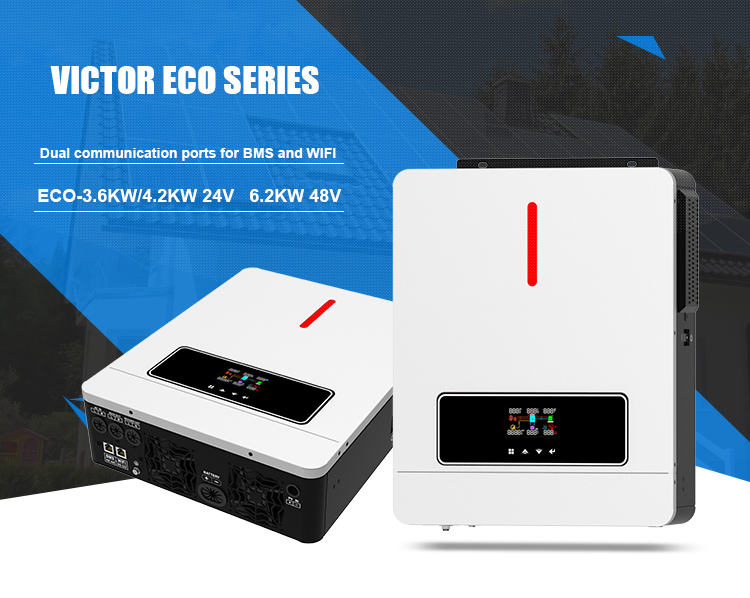
Not all solar equipment is engineered to handle sensitive loads. The internal architecture of your equipment determines how effectively it manages the transition from grid power to battery power. Understanding these topologies helps you separate marketing claims from engineering reality.
Manufacturers frequently conflate EPS and UPS ratings in their marketing materials, leading to widespread consumer confusion. You must understand the technical distinction between the two.
An Emergency Power Supply (EPS) is designed to keep essential loads running during a blackout. A standard Hybrid Solar Inverter typically carries an EPS rating, meaning it utilizes mechanical relays to achieve a transfer time of 10ms to 20ms. This is perfectly adequate for keeping the lights on, keeping the refrigerator cold, and powering basic electronics.
A true Uninterruptible Power Supply (UPS) is fundamentally different. An Offline or Line-Interactive UPS typically achieves 4-8ms transfer times. An Online Double-Conversion UPS operates with a 0ms transfer time because it constantly converts AC to DC and back to AC, meaning the battery is always powering the load. Most solar backup systems are EPS devices, not true UPS devices, regardless of what the brochure implies.
The internal transformer design heavily influences switching speed and surge capability. We evaluate these architectures based on the specific loads present in the home.
Maintaining continuous power during a grid failure requires complex orchestration between multiple power sources. An MPPT hybrid inverter manages solar DC input, battery DC input, and grid AC input simultaneously. The internal DC bus is the heart of the system. The solar panels feed the MPPT, which feeds the DC bus. The battery also feeds the DC bus. The inverter bridge pulls from this DC bus to create AC power for your home.
When the grid drops, the inverter suddenly pulls massive current from the DC bus to power the entire household load. The transfer dynamics rely heavily on the Maximum Power Point Tracking (MPPT) charge controller. The controller must react instantly to the sudden loss of grid AC by ramping up solar production or drawing heavily from the battery to stabilize the DC bus voltage. If the charge controller's response time lags, the DC bus voltage dips from 400V down to 350V. This internal voltage dip directly translates to an unstable AC output during the critical transfer window, crashing sensitive electronics even if the mechanical relay switched quickly.
Many homeowners expect a single, whole-home backup system to provide flawless 0ms transfer for every circuit in the house. Attempting to force a whole-home system to act as a zero-transfer UPS introduces significant architectural risks.
Expecting a single inverter or AC-coupled battery system to provide 0ms transfer for an entire 200-amp electrical panel is a fundamental flaw in system design. Whole-home backup requires a massive Automatic Transfer Switch (ATS) installed between your utility meter and your main breaker panel. These whole-home transfer switches are large mechanical devices designed to safely break 200 amps of flowing current.
Due to safety regulations and the physical mass of the contactors, a whole-home ATS takes 1 to 2 seconds to physically disengage from the grid and lock into the backup position. A magnetic coil has to pull a heavy block of copper against heavy spring tension. It physically cannot move in 5 milliseconds. During this 1-2 second gap, your home has no power. While the system masks the voltage sag enough to keep basic LED lights from flickering noticeably, every sensitive electronic device in your home drops offline.
To mitigate this, you must isolate sensitive loads. We install a dedicated critical load sub-panel. You wire your home office, network rack, and security systems into this sub-panel. You then power this sub-panel directly from the dedicated backup/EPS port on your equipment. This configuration bypasses the slow, whole-home ATS, allowing your sensitive electronics to benefit from the faster 4-10ms transfer speeds of the internal relays.
For zero-interruption critical loads, you cannot rely on whole-home architecture alone. You must adopt the industry-standard workaround: layered architecture. You use your main solar and battery system for long-duration backup, providing power for hours or days. You then place small, localized Online UPS units directly at the point of use for sensitive devices.
A dedicated double-conversion UPS sitting next to your server rack or medical equipment bridges the 10-20ms or 1-2 second transfer gap perfectly. The localized UPS absorbs the micro-outage, providing true 0ms transfer. Once the main solar system takes over a second later, it begins recharging the localized UPS.
You must exercise caution regarding compatibility. Many localized UPS units are highly sensitive to power quality. If your main backup system produces a modified sine wave, the localized UPS rejects the incoming power, assuming it is unstable. It eventually drains its own battery and dies. You must ensure your primary backup system produces a pure sine wave output to guarantee compatibility with localized UPS hardware.
Achieving seamless backup power for sensitive home loads requires precise engineering, not just large batteries. While high-quality backup systems achieve 4-10ms transfer times suitable for most general electronics and smart home devices, they are not direct replacements for true 0ms online UPS systems when dealing with hyper-sensitive IT or medical equipment. Understanding the limitations of mechanical relays and whole-home transfer switches empowers you to design a resilient, layered power architecture.
To ensure your sensitive loads remain online during the next grid failure, execute the following steps:
A: Standard ATX computer power supplies typically have a hold-up time of 16ms. Therefore, a transfer time of strictly under 8ms is required to prevent the power supply from draining and causing a hard reboot. For highly sensitive IT equipment or aging power supplies, a transfer time of under 5ms is highly advisable.
A: No, not in the traditional sense. Most inverters act as an Emergency Power Supply (EPS) with a 10-20ms delay due to mechanical relays. They are not a true 0ms UPS unless specifically equipped with a Static Transfer Switch (STS) and marketed as an online double-conversion unit.
A: Lights flicker due to voltage sag during the 10-20ms transfer window. Additionally, when the backup system takes over, latent load appliances like refrigerators or HVAC compressors attempt to draw massive inrush current simultaneously, causing a secondary voltage drop that dims the lights.
A: A 10ms transfer time is generally fast enough to keep most routers, smart home hubs, and televisions powered on without interruption. A 20ms transfer time exceeds the hold-up capacity of most ATX power supplies, which will likely cause desktop computers and sensitive networking gear to restart.
A: Yes. Whole-home transfer switches often take 1 to 2 seconds to physically disconnect from the grid and engage backup power. While basic appliances handle this delay fine, highly sensitive equipment like NAS drives or medical devices require a localized plug-in UPS to bridge this specific time gap.