
 English


Views: 0 Author: Site Editor Publish Time: 2026-10-18 Origin: Site


Are unpredictable power outages disrupting your daily operations and leaving your property in the dark? Traditional power grids are increasingly failing us. Aging infrastructure and extreme weather events expose the fragility of centralized electricity. Renewable energy sources like solar and wind offer a clean alternative. However, their intermittent nature demands a highly reliable backup solution.
A modern Energy Storage System acts as this critical buffer. It transforms erratic renewable generation into a steadfast, round-the-clock power supply. In this technical guide, we will explore the latest advancements in battery architectures. We will also decode current industry trends and provide an engineer-level framework to help you select the exact hardware required to secure your power independence.
The landscape of power management has undergone a radical transformation over the past decade. Historically, off-grid and backup power relied heavily on bulky lead-acid batteries. I frequently recall the typical setup from twenty years ago. Installers had to wire massive, heavy banks of batteries that required constant maintenance. These systems needed regular watering and a well-ventilated room to off-gas toxic fumes. Worse still, their cycle life was severely limited. Discharging them below half of their total capacity often caused rapid degradation.
Furthermore, the shift toward modern energy storage was catalyzed by several critical factors. The exponential growth of intermittent renewable energy necessitated a reliable method to capture excess power for times when the sun sets or the wind dies down. Technological innovation simultaneously pushed for higher energy density. This allowed manufacturers to pack massive power reserves into sleek, compact chassis. Strict global environmental targets also demanded solutions with longer lifespans to combat the growing issue of electronic waste.
Today, the industry is distinctly categorized. Utility-scale operations lean toward flow batteries or gravity storage to manage massive grid loads. In contrast, the residential and commercial sectors are firmly dominated by advanced lithium-ion technologies. The modern setup is no longer just a passive battery. It functions as an intelligent, software-driven appliance autonomously optimizing your daily energy usage.
Lithium-based chemistries currently hold the overwhelming market share in localized energy storage. This dominance stems from their exceptional energy density, which is the ability to hold a massive amount of electricity in a relatively lightweight module. Economies of scale in global manufacturing have driven down the cost per kilowatt-hour significantly. This manufacturing boom makes a lithium battery energy storage system financially accessible to a much broader range of consumers and small businesses.
Within the lithium category itself, a major evolutionary pivot has occurred. Early stationary systems heavily utilized Nickel Manganese Cobalt, or NMC, chemistries. These are similar to the cells found in electric vehicles. However, the industry has largely transitioned to Lithium Iron Phosphate, known as LiFePO4, for home and business applications.
Specifically, LiFePO4 has overtaken legacy chemistries for several empirical reasons. First is superior thermal stability. LiFePO4 cells possess a remarkably strong chemical bond that does not release oxygen if punctured or overheated. This chemical structure virtually eliminates the risk of thermal runaway and fires. Second is extended cycle life. While a standard NMC battery might last 2,000 to 3,000 cycles, a high-quality LiFePO4 unit can endure 6,000 to 10,000 charge and discharge cycles while retaining the vast majority of its original capacity. Finally, this chemistry completely eliminates the use of cobalt. This sidesteps the ethical mining concerns and environmental degradation associated with that specific mineral.
| Battery Chemistry | Average Cycle Life | Thermal Safety Level | Maintenance Required |
|---|---|---|---|
| Traditional Lead-Acid | 500 - 1,000 | Moderate | High |
| Lithium NMC | 2,000 - 3,000 | Low to Moderate | Zero |
| LiFePO4 | 6,000 - 10,000+ | Extremely High | Zero |
Recent market intelligence indicates a massive acceleration in alternative battery chemistries. The global push for rapid decarbonization is forcing innovators to look beyond current limitations. While lithium remains the undisputed king of current deployments, supply chain bottlenecks and the sheer volume of global demand are driving the next wave of engineering breakthroughs.
Solid-state technology replaces the flammable liquid or gel electrolyte found in traditional lithium cells with a solid conductive material, such as ceramics or advanced polymers. This fundamental architectural change offers immense benefits. By eliminating the liquid component, the fire risk drops to absolute zero. This solid structure also prevents the formation of microscopic lithium spikes that cause short circuits. Ultimately, this unlocks the potential for ultra-fast charging and a massive leap in energy density within the same physical footprint.
As the electric vehicle market consumes vast quantities of global lithium, sodium-ion technology is emerging as a highly viable, cost-effective alternative. Sodium is universally abundant, incredibly inexpensive, and easy to extract. Although sodium-ion batteries currently possess a lower energy density than lithium, weight is rarely a primary constraint for stationary commercial storage. Industry analysts note that commercialization timelines for sodium-ion are accelerating, presenting a stabilizing force for future market pricing.
In addition, artificial intelligence is revolutionizing internal battery management. Modern software-driven systems can now analyze local weather patterns and historical consumption data. If a severe storm is approaching, the AI preemptively commands the system to charge to maximum capacity from the grid, ensuring absolute readiness before the power lines go down.
As the renewable energy market matures, consumer preference has sharply shifted away from piecemeal, custom-built battery banks. I often inspect older garages cluttered with separate inverters, charge controllers, and battery racks connected by a chaotic web of conduit wiring. That industrial aesthetic is rapidly becoming obsolete.
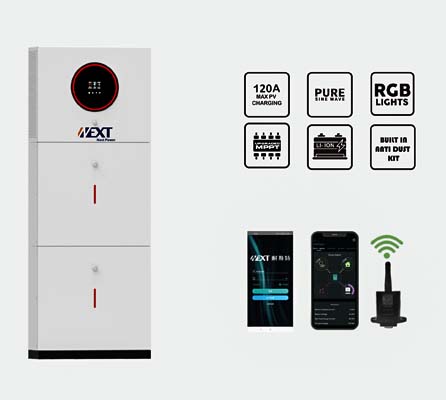
Today, the gold standard is the all in one energy storage system. This unified appliance houses the battery modules, the Battery Management System, and the inverter within a single, sleek chassis.
Integrated designs offer substantial space-saving benefits. They feature modern aesthetics that blend seamlessly into residential environments, requiring a fraction of the wall and floor space compared to legacy setups. For field technicians, this plug-and-play architecture significantly reduces commissioning time and wiring complexity. Fewer external cables mean a drastically reduced margin for human error during installation.
Crucially, unified systems guarantee flawless internal communication. In a piecemeal setup, software protocols between a battery from one brand and an inverter from another can occasionally conflict. This leads to inaccurate readings or sudden system faults. When all internal components are engineered by the same manufacturer, you achieve highly accurate state-of-charge monitoring and optimized overall performance.
Understanding the physical batteries is only half the equation. The true intelligence of modern power management relies entirely on how that energy is routed. Unlike traditional string inverters that merely convert direct current from solar panels into alternating current for household use, a hybrid solar inverter acts as a centralized brain for your entire property.
This multi-directional device simultaneously manages electricity from three distinct origins. It coordinates the photovoltaic array on your roof, the battery bank in your garage, and the utility grid outside. By utilizing advanced tracking technology, it ensures power is directed exactly where it is needed, the precise millisecond it is needed.
One of the most measurable financial benefits of a sophisticated inverter is its ability to perform Time-of-Use load shifting. Many utility companies charge variable rates, with electricity prices skyrocketing during high-demand evening hours. A smart inverter allows you to store inexpensive solar energy generated during midday. When the sun goes down and utility rates spike, the system automatically discharges that stored power to run your household. This effectively bypasses peak grid pricing and accelerates your return on investment.
Beyond the daily financial savings, the primary motivation for adopting localized storage is resilience against grid failures. However, it is vital to understand the technical distinctions between different backup configurations to ensure your home remains illuminated during a crisis.
A common misconception is that standard solar panels will continue to provide power during a blackout. For safety reasons, standard grid-tied inverters are legally required to shut down during an outage. This prevents back-feeding electricity into power lines where utility workers might be operating.
To keep the lights on, you need a dedicated solar backup power system. While total off-grid setups require massive, oversized battery banks to survive prolonged winter storms, a grid-tied system with backup capabilities offers the best of both worlds. It uses the utility grid as an unlimited safety net during poor weather but automatically isolates your home during a blackout to keep critical circuits active.
The effectiveness of a backup setup is measured by its transfer time. Modern solutions feature an Emergency Power Supply mode equipped with a high-speed automatic transfer switch. When the system detects a drop in grid voltage, it physically disconnects from the grid and switches to battery power in less than 20 milliseconds. Picture this scenario: you are working from home during a severe thunderstorm. A lightning strike takes out the neighborhood grid, but your desktop computer, Wi-Fi router, and lights do not even flicker.
Navigating the specifications of technical equipment can be daunting. To make an objective decision, buyers must look past marketing jargon and focus on concrete engineering metrics. When evaluating home energy storage, use this practical checklist to size your system correctly:
The deployment of advanced energy storage is not merely a matter of personal convenience. It is a foundational pillar of global infrastructure modernization. By utilizing localized storage to deploy clean solar power during peak evening hours, consumers directly reduce the grid reliance on highly polluting fossil-fuel power plants.
Looking at broader industry trends, utility companies are increasingly viewing residential batteries not as a threat, but as distributed grid assets. This has given rise to Virtual Power Plants. During extreme grid stress, such as a severe summer heatwave, utility networks can send a secure signal to cloud-based software. This software draws a tiny fraction of power from thousands of participating home batteries to stabilize the regional grid. In exchange, homeowners are compensated financially. This transforms a passive backup device into an active, revenue-generating asset.
As manufacturing processes scale and emerging chemistries mature, market pricing continues to stabilize while efficiency skyrockets. Waiting for future breakthroughs is no longer necessary. Current systems are fully capable of providing decades of secure, clean, and financially sound energy independence.
Modern energy storage is the ultimate key to securing your daily power supply against an increasingly unpredictable grid. With lithium iron phosphate batteries offering unparalleled safety and long-term performance, the technology has reached a reliable plateau of excellence. Integrated chassis designs save both space and installation time, eliminating the headache of mismatched components. By pairing high-capacity modules with intelligent hybrid inverters, you maximize your daily solar usage, slash utility bills, and protect your operations during severe outages. Stop leaving your property vulnerable to grid failures. Invest in a highly reliable, integrated backup solution today and secure your zero-carbon future. Explore the advanced VICTOR ESS series at NextPower to find the perfect scalable configuration for your specific energy needs.
The operational lifespan typically ranges from 10 to 15 years, heavily depending on the specific chemistry and daily usage habits. Lithium Iron Phosphate is currently the industry benchmark for longevity, routinely delivering 6,000 to 10,000 charge and discharge cycles before noticeable degradation occurs.
An average home requires between 10kWh and 15kWh of storage to comfortably cover overnight consumption. However, if you want full off-grid capabilities or need to run heavy appliances like central air conditioning during a multi-day blackout, you may need to scale your system to 20kWh or more. Always calculate your specific daily kilowatt-hour usage before purchasing.
Yes, retrofitting a battery to an existing solar array is a very common practice. You can utilize an AC-coupled battery system, which features its own built-in inverter and connects directly to your home electrical panel. Alternatively, you can replace your older string inverter with a modern hybrid unit, creating a DC-coupled system that is generally more efficient at storing raw solar power.
A standard solar inverter performs a single, unidirectional job. It converts the direct current generated by your roof panels into alternating current for household use. A hybrid inverter is multidirectional. It converts direct current to alternating current, but also manages the flow of electricity to charge your battery bank, and can even draw inexpensive power from the grid to top off your batteries during off-peak hours.
While solid-state technology is making massive strides in research labs and early electric vehicle prototypes, it is not yet widely available or cost-effective for residential stationary storage. Currently, LiFePO4 remains the absolute best choice for home and commercial backup due to its proven safety record and manufacturing scale.
For the vast majority of residential and light commercial applications, absolutely. While the upfront hardware cost might appear slightly higher than buying separate, mismatched components, the overall investment is often lower due to drastically reduced installation labor. Furthermore, native communication between the internal battery and inverter eliminates frustrating software integration errors.
This depends entirely on the capacity and continuous output of the system you install. Standard residential setups are usually wired to a critical loads panel, meaning only pre-selected essential circuits remain active. However, larger, scalable modular systems featuring 10.2kW outputs can be easily configured for true whole-home backup, allowing you to run heavy-draw appliances during a blackout.