
 English


Views: 0 Author: Site Editor Publish Time: 2026-10-17 Origin: Site


For decades, data retention defined the global tech boom. Today, a far more critical resource dominates industry headlines. That resource is power.
Looking at recent global energy trends, the industry is witnessing a massive transition. Centralized fossil-fuel generation is rapidly giving way to decentralized, renewable microgrids. Extreme weather events and aging utility infrastructure cause frequent grid failures. Furthermore, utility rates continue an aggressive upward climb. Consequently, capturing and managing electricity is no longer just a large-scale industrial concern. It has become a strict household necessity. In this comprehensive guide, we will explore the diverse architecture of modern energy setups, break down how they function on a technical level, and provide actionable insights on how to choose the right configuration for your specific lifestyle.
At its core, an Energy Storage System operates as a technological buffer. It is a framework designed to capture energy produced at one specific moment and retain it for deployment at a later, more advantageous time. This strategic process, often referred to as energy shifting, bridges the crucial gap between power generation and consumption. By doing so, it ensures that electrical supply consistently meets demand, regardless of external environmental conditions.
The operational cycle relies on two primary phases: charging and discharging. Picture a sweltering July afternoon. Your rooftop solar panels are generating peak power, but nobody is home to use it. During this charging phase, the internal system absorbs that surplus electricity. In contrast, when the sun sets and your family returns home to turn on high-draw appliances, the discharging phase begins. The system releases the stored electrical energy to power your household loads. This effectively shields you from expensive evening utility rates.
This shift toward localized power management makes these installations indispensable. Solar panels and wind turbines are inherently intermittent. They only generate power when environmental conditions permit. Without a robust method to capture that fleeting energy, any excess is either sent back to an aging grid for pennies on the dollar or wasted entirely. A localized system captures this lost value, stabilizing local microgrids and protecting facilities from unpredictable blackouts.
While consumer discussions often fast-track directly to batteries, the science of energy retention is a vast field. Understanding macro-level technologies provides valuable context for how power is managed on a global scale before we narrow our focus to consumer-level solutions.
Mechanical frameworks store energy by harnessing kinetic or gravitational forces. These are massive, utility-scale installations engineered to balance the power grids of entire cities or regions.
Thermal energy retention involves capturing extreme heat or cold for later use. This is primarily deployed in heavy industrial applications or large-scale power generation facilities.
Electrochemical storage converts electrical energy into chemical energy, reversing the process seamlessly to discharge electricity. Because they are highly scalable, modular, and can be installed virtually anywhere, electrochemical batteries are the primary focus for residential and commercial users.
| Storage Category | Primary Mechanism | Typical Scale | Commercial Value & Application |
|---|---|---|---|
| Mechanical | Gravity, Kinetic, Pressure | Utility / Regional Grid | Grid balancing, massive capacity storage for municipal infrastructure. |
| Thermal | Heat capacity, Phase change | Industrial / Commercial | Concentrated solar plants, commercial HVAC peak load shifting. |
| Electrochemical | Chemical reactions | Residential to Utility | Home backup, peak shaving, electric vehicles, localized microgrids. |
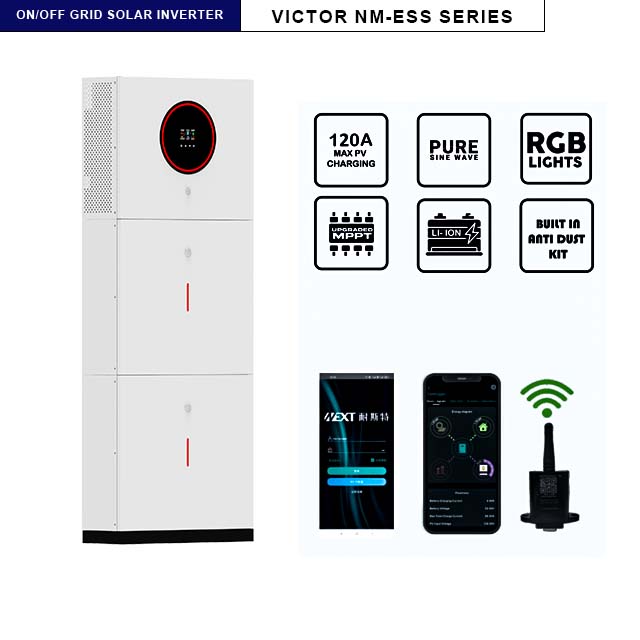
For decision-makers evaluating consumer or commercial power solutions, understanding the nuances of different battery chemistries is critical. Recent industry analysis highlights a massive pivot in the market. As supply chains mature and raw material costs stabilize, legacy chemistries are being rapidly phased out in favor of highly efficient, longer-lasting alternatives. The chemistry inside the casing dictates the unit's lifespan, thermal safety, efficiency, and ultimate return on investment.
Lithium-ion technology is currently the undisputed gold standard. Within this broad category, Lithium Iron Phosphate has emerged as the preferred chemistry for stationary storage. Unlike the batteries in your smartphone, these cells prioritize longevity and safety over extreme compactness.
Investing in a modern lithium battery energy storage system offers several distinct, measurable advantages. First, it features a high Depth of Discharge. This metric allows users to safely drain up to 95 percent of the total capacity without causing internal degradation. Specifically, premium products like the Next Power VICTOR ESS Series boast an exceptional cycle life, rated for over 6,000 charge and discharge cycles. In practical engineering terms, this translates to a lifespan of well over a decade with zero active maintenance required.
Lead-acid is the legacy technology of the battery world, relied upon for over a century. They are divided into flooded types, which require regular watering and ventilation, and sealed types like AGM or Gel.
While their primary advantage is a low upfront cost, they come with severe operational bottlenecks. Their practical Depth of Discharge is generally limited to 50 percent. Draining them further permanently damages the internal lead plates. Consequently, you must purchase twice the rated capacity just to meet your actual energy needs. Today, they are mostly relegated to off-grid hunting cabins operating on highly restrictive budgets where upfront capital is the sole consideration.
Emerging technologies are continuously being developed to address the heavy-duty needs of large-scale commercial applications.
A functional residential setup is not merely a box of batteries dropped into a utility room. It is a sophisticated network of hardware and software working in perfect unison. Educating yourself on these components is essential for evaluating overall build quality.
The physical pack contains the individual electrochemical cells wired together to achieve a specific voltage. Yet, the true hero inside this enclosure is the Battery Management System. Think of this component as a vigilant traffic controller. It continuously monitors the voltage, current, and temperature of every individual cell. Its primary function is safety, actively preventing overcharging, deep discharging, and thermal runaway. A premium management board also performs cell balancing, ensuring all cells charge equally, which is absolutely vital for maximizing operational lifespan.
Batteries store energy as Direct Current, but your household appliances and the utility grid operate on Alternating Current. An inverter is strictly required to bridge this fundamental gap.
In modern architectures, a hybrid solar inverter acts as the central brain of the entire ecosystem. Unlike older string inverters that only convert solar Direct Current to home Alternating Current, a hybrid unit is a multi-directional powerhouse. It manages the power coming from the roof, converts it for the home, handles the charging of the battery bank, and facilitates the bidirectional flow of power with the utility grid. If a storm knocks out neighborhood power, this intelligent routing allows for instantaneous switching. Advanced models execute this transfer in under 20 milliseconds, keeping your lights on without a single noticeable flicker.
When homeowners first begin researching backup solutions, they are often overwhelmed by the sheer number of separate parts required to build a functional architecture. Historically, creating a resilient setup required a piecemeal, custom-built approach.
The traditional method involves purchasing a standalone solar inverter, a separate battery inverter, distinct battery modules, external charge controllers, and a complex web of heavy-gauge copper cabling to connect everything safely. Installers must then attempt to configure software protocols so equipment from different, often competing, brands can communicate. If the software of the inverter does not execute a perfect digital handshake with the battery board, the setup may suffer from inefficient charging, reduced lifespan, or complete system faults. Visually, this results in an unsightly, cluttered installation that eats up valuable wall space.
In response to these massive friction points, the industry has shifted rapidly toward integrated solutions. An all in one energy storage system fundamentally changes the installation and user experience. By definition, this architecture houses the hybrid inverter, the battery modules, the management system, and all necessary internal wiring within a single, cohesive, factory-tested enclosure.
The benefits of choosing an integrated system over a component-based setup are substantial:
Selecting the correct size for your solar backup power system is a precise mathematical exercise, not a guessing game. A setup that is too small will fail to keep critical appliances running during an outage, while an excessively large one represents wasted capital. Sizing relies on understanding two distinct engineering metrics: Capacity and Power Output.
Kilowatt-hours measure the total volume of electrical energy your battery can store. Think of the battery as a water tank. The capacity rating is the total amount of water it holds. To determine your required capacity, you must audit your daily energy usage. If your critical loads consume 10 kilowatt-hours over a full day, you need a battery with at least that much usable capacity to survive without grid or solar input. Always factor in the Depth of Discharge limit. A battery rated for 10 kilowatt-hours with a 90 percent discharge limit only provides 9 kilowatt-hours of actual usable energy.
While capacity dictates how long your battery will last, power output dictates how many appliances you can turn on simultaneously. Returning to the water tank analogy, power output is the diameter of the pipe coming out of the tank. A larger pipe allows more water to flow at once.
Every appliance requires continuous watts to run, and heavy motor-driven appliances require a massive surge of watts just to start up. Your inverter peak and continuous output ratings must exceed the combined wattage of the appliances you intend to run at the exact same time. Running a laptop and LED lights requires very low output, but starting a central air conditioner or a well pump demands a high-output inverter.
Your relationship with the utility grid dictates your sizing strategy. For a grid-tied home intended only for brief outage protection and peak-rate shifting, a smaller capacity around 5 to 10 kilowatt-hours is often sufficient. Conversely, completely off-grid properties require highly conservative calculations. These properties demand massive capacity arrays, often exceeding 30 kilowatt-hours, to sustain the property through consecutive days of poor weather with zero utility fallback.
Navigating technical specifications can be daunting. For those ready to secure their energy independence, use the following objective criteria to look past marketing claims and evaluate potential hardware.
Not all lithium is created equal. While Nickel Manganese Cobalt batteries offer a slightly higher energy density, Lithium Iron Phosphate is widely considered the superior choice for stationary residential use. This chemistry has a significantly higher threshold for thermal runaway, making it inherently safer and less prone to overheating if damaged. Furthermore, it completely avoids the use of cobalt, sidestepping global ethical mining concerns.
A robust warranty reflects manufacturer confidence. Look closely at the guaranteed cycle life. Industry-leading units will guarantee 6,000 to 8,000 cycles while retaining at least 70 to 80 percent of their original capacity. To put this into perspective, cycling a battery once a day for 6,000 days equates to over 16 years of reliable daily use.
Your energy needs today will likely grow tomorrow. The purchase of an electric vehicle, the addition of a heat pump, or a home expansion will demand more electrical capacity. Choose a modular design that allows you to start with a base capacity and seamlessly stack or connect additional battery modules later. Products like the Next Power VICTOR series are designed specifically for this type of scalable growth, allowing expansion without requiring a complete overhaul of your existing inverter.
Premium hardware must be paired with robust software. Insist on systems featuring advanced remote integration. A dedicated mobile application that allows you to view solar generation, battery charge status, and home consumption in real-time is absolutely essential. Advanced software can even automatically adjust charging behaviors based on your utility provider peak rates, maximizing your financial savings effortlessly.
While the global landscape features many different storage methods, lithium-based battery technology has decisively proven itself as the absolute best choice for consumer applications. It delivers safe, reliable, and maintenance-free power for modern households facing an increasingly unpredictable electrical grid. Rather than wrestling with complex wiring, mismatched components, and cluttered installations, we highly recommend an integrated approach. By opting for a unified, all-in-one architecture, homeowners save valuable time, physical space, and installation costs while securing total energy independence. Secure your home power future today by exploring the advanced VICTOR ESS Series at Next Power to customize a setup that perfectly matches your lifestyle.
The distinction lies in their functional capabilities. A standard string inverter is a one-way device. Its sole job is to convert the Direct Current electricity generated by your solar panels into Alternating Current electricity for your home. It cannot interface directly with a battery. A hybrid inverter is a multi-directional hub. It simultaneously manages power from the panels, converts it for the home, converts grid power to charge the batteries, and draws from the batteries during an outage. This unified management eliminates the need to purchase multiple separate inverters.
The longevity of a modern lithium system, specifically those utilizing Lithium Iron Phosphate chemistry, is exceptionally high. Under normal daily operating conditions, these units are engineered to last between 10 to 15 years, typically enduring 6,000 to 8,000 charge and discharge cycles. This represents a massive leap in durability compared to legacy lead-acid batteries, which often require replacement every few years and suffer from severe degradation if discharged too deeply.
Yes, it is entirely possible to achieve whole-home backup, provided the setup is engineered correctly. To run an entire house, both the continuous output of the inverter and the total capacity of the battery bank must be sized to exceed the maximum potential surge load of your home. However, because whole-home backup requires massive battery banks to support heavy loads like central air conditioning, many homeowners opt for a more cost-effective critical load setup. This approach isolates essential circuits like refrigerators and lighting to remain powered during an outage.
For the vast majority of residential users, the answer is a definitive yes. While the initial hardware cost of an integrated unit may appear similar to purchasing separate components, the total cost of ownership is often lower. Integrated designs drastically reduce professional installation time and associated labor costs. Furthermore, they eliminate software compatibility errors, save valuable physical space, and provide a much cleaner aesthetic. The peace of mind that comes from a factory-tested, unified architecture generally outweighs the perceived savings of a piecemeal approach.
Yes, provided you select the correct chemistry. Modern systems utilizing Lithium Iron Phosphate are extremely safe for indoor installation, such as in a garage or utility room. Unlike older chemistries, they do not off-gas toxic fumes, and they possess a much higher thermal stability threshold, making them highly resistant to overheating and fire hazards.
A standard modern refrigerator consumes roughly 1 to 2 kilowatt-hours per day, and a few LED lights consume very little power. To keep these critical loads running for a full 24-hour period without any solar recharge, a small entry-level battery capacity of around 5 kilowatt-hours is generally more than sufficient. However, sizing up slightly ensures you have a buffer for unexpected longer outages.