
 English


Views: 0 Author: Site Editor Publish Time: 2026-09-16 Origin: Site


A persistent misconception in the renewable energy industry is that achieving grid independence requires purchasing the largest possible Home Solar Inverter to match total solar array output peak-for-peak. Many system owners mistakenly believe a 1:1 ratio between solar panel wattage and inverter capacity guarantees maximum energy harvesting. In reality, this approach leads to wasted capital, suboptimal conversion efficiency during low-load periods, and unnecessary electrical infrastructure upgrades.
Under-sizing system components introduces significant risks, including hardware failure during peak demand and an inability to start heavy household appliances. The optimal path to grid resilience relies on strategic right-sizing. By leveraging modern load management techniques, strategic clipping, and hybrid architectures, you can maximize grid independence without absorbing bloated hardware costs. Proper sizing balances peak efficiency with continuous load requirements, ensuring reliable power delivery under all operating conditions.
Selecting hardware based solely on the absolute maximum output of a solar array introduces severe capital inefficiency. The cost of power electronics increases linearly with capacity. A 15kW unit demands a significantly higher upfront investment than an 8kW or 10kW unit. However, the actual utilization of that peak capacity drops exponentially. Solar arrays only produce their maximum rated output under perfect, rare conditions—typically cool, clear days with optimal sun angles.
Paying a premium for peak capacity that you utilize for only 2% to 5% of the year severely degrades overall system return on investment. The financial resources allocated to oversized hardware could be better deployed toward expanding battery storage capacity or upgrading household energy efficiency. When the inverter capacity far exceeds the daily operational norm, the system carries idle overhead that provides zero practical value to the household during the vast majority of the year.
| Inverter Size | Solar Array Size | DC/AC Ratio | Estimated Annual Peak Utilization | Capital Efficiency Rating |
|---|---|---|---|---|
| 11.4 kW | 10.0 kW | 0.87 (Oversized) | < 1% | Poor |
| 10.0 kW | 10.0 kW | 1.00 (Matched) | 2% - 4% | Below Average |
| 7.6 kW | 10.0 kW | 1.31 (Right-Sized) | 15% - 20% | Excellent |
Power conversion equipment does not operate at a flat efficiency rate across all load levels. Inverters require a minimum voltage and load threshold to operate efficiently, powering their internal processors, cooling fans, and switching components. This baseline energy requirement is known as parasitic draw. If you install a massive unit to handle a rare peak load, you pay a daily energy penalty just to keep the machine awake.
When a massively oversized unit runs at 10% to 20% of its rated load during standard daily operation, its conversion efficiency drops precipitously. An inverter rated for 15kW might operate at 97.5% efficiency when loaded at 10kW, but that same unit could drop below 85% efficiency when supplying only 1kW to run basic household electronics and lighting overnight. By matching the inverter closer to the average daily load rather than the theoretical peak, the system operates in the sweet spot of its efficiency curve for more hours of the day. This ultimately delivers more usable AC power to the home.
Achieving grid independence requires a clear definition of what needs to remain powered during an outage. Attempting to back up a 200A main panel to run every appliance simultaneously demands massive inverter capacity and extensive battery banks. This whole-home backup approach is technically feasible but rarely financially practical for the average household. You end up sizing the system for the absolute worst-case scenario, which might happen once every five years.
A more strategic approach involves installing an essential load backup inverter connected to a dedicated critical loads sub-panel. This isolates vital circuits from heavy, non-essential draws. Identifying essential loads typically includes refrigeration, medical equipment, well pumps, communication routers, and basic lighting. By physically separating these circuits, the system can maintain critical operations indefinitely on a much smaller hardware footprint. The financial trade-off is highly favorable, providing security and resilience without the exorbitant costs associated with backing up luxury loads like electric ovens or pool heaters during a grid failure.
Accurate system sizing requires a rigorous household energy audit to differentiate between continuous load requirements and peak demand. Continuous load represents the baseline operation of the home—the steady draw of refrigerators, lights, computers, and televisions. Peak demand occurs when heavy motor-based appliances start up simultaneously, requiring a brief but massive influx of power.
To determine the correct hardware specifications, follow these steps to audit the appliances connected to the critical loads panel:
| Appliance Type | Average Continuous Load (Watts) | Average Surge/Starting Load (Watts) |
|---|---|---|
| Modern Refrigerator | 200W - 400W | 1,200W - 1,500W |
| 1/2 HP Well Pump | 1,000W | 2,500W - 3,000W |
| Central HVAC (3 Ton) | 3,500W | 10,000W+ (LRA) |
| LED Lighting (10 bulbs) | 100W | 100W (No Surge) |
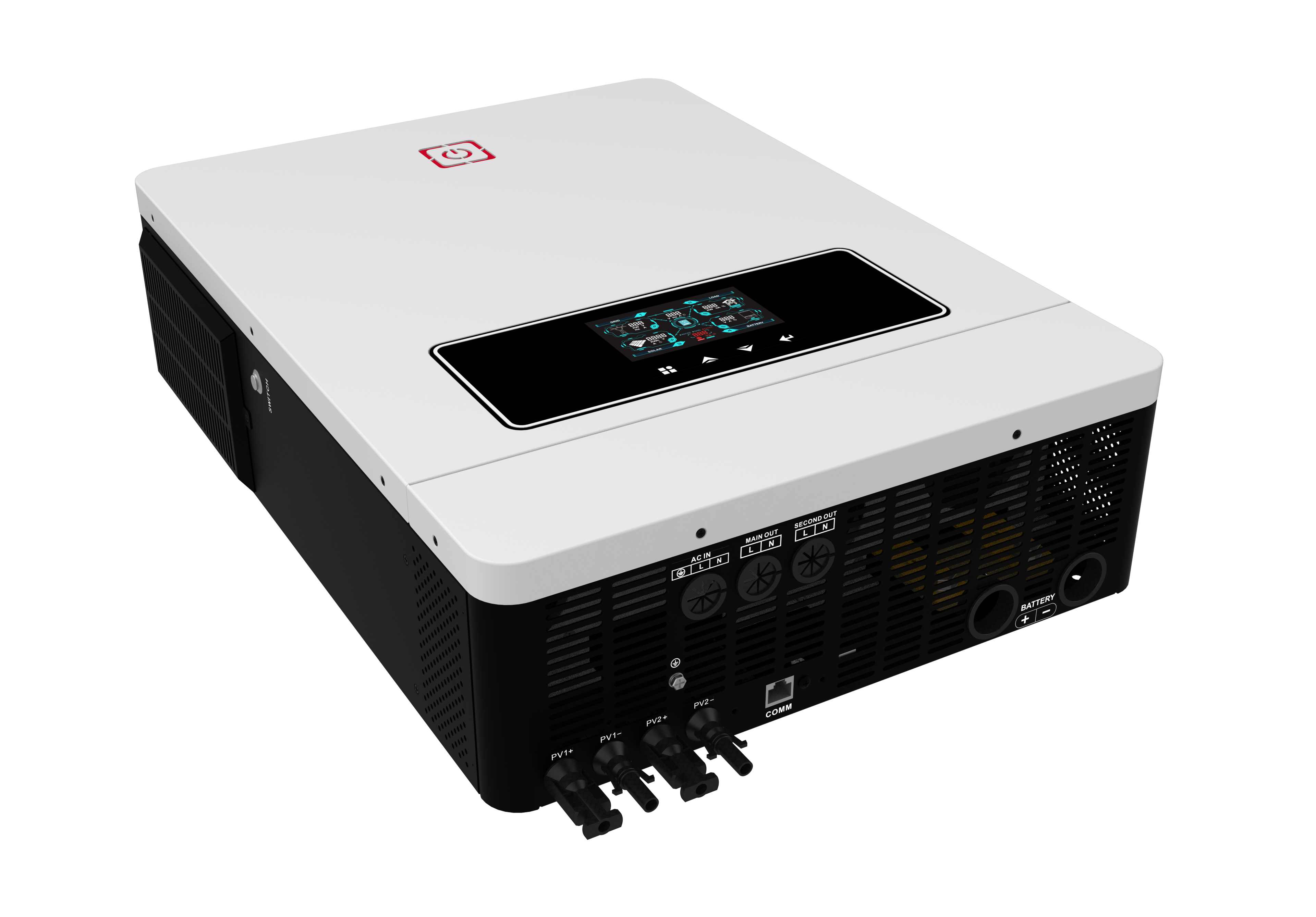
Modern energy systems have evolved beyond standalone components. A residential hybrid power inverter integrates Maximum Power Point Tracking (MPPT) charge controllers and battery management systems into a single, cohesive unit. This integration optimizes the efficiency of solar modules and manages the complex flow of electricity between the roof, the battery bank, the home, and the grid.
These hybrid models often feature dual or multiple MPPT inputs. This allows installers to utilize different roof azimuths (e.g., east and west-facing planes) without requiring a massive single-string unit. Hybrid systems utilize intelligent battery dispatch to shave peaks. When household demand spikes momentarily—such as when an air conditioner compressor engages—the system can pull supplemental power from the battery rather than relying solely on the solar array or the grid. This dynamic load management reduces the need for larger, oversized hardware to handle momentary demand spikes.
The industry frequently debates the merits of centralized string inverters versus decentralized microinverters mounted behind each panel. Microinverters inherently solve panel-level DC/AC ratios, as each unit is sized specifically for the panel it serves. They also mitigate shading issues on complex roofs by isolating the production of each module.
For homes prioritizing grid independence and energy storage, a properly sized central hybrid system often proves superior. Centralized architectures allow for unified battery backup and more sophisticated load management. DC-coupled central systems avoid the multiple conversion losses associated with AC-coupled microinverter setups. By centralizing the power electronics, you gain a more robust platform for whole-system monitoring and off-grid operation. You also keep sensitive power conversion electronics off the hot roof, extending their operational lifespan.
The DC/AC ratio is the size of the solar array (DC power) relative to the inverter's maximum AC output. While a 1:1 ratio seems logical, physics and economics dictate otherwise. Solar panels rarely produce their nameplate wattage due to real-world variables like temperature, dust, and sun angle.
Strategic clipping occurs when the DC array produces slightly more power than the AC rating can process, causing the system to clip or discard the excess peak generation. Losing a marginal amount of peak summer production is mathematically preferable to the cost of larger hardware. By targeting a DC/AC ratio between 1.15 and 1.30, the system reaches its maximum output earlier in the morning and sustains it later into the afternoon. This broadens the daily production curve, yielding more total kilowatt-hours over the year despite the minor losses during peak midday hours.
Right-sizing relies heavily on controlling what draws power and when. Integration with smart electrical panels and load-shedding relays allows a smaller system to perform like a much larger one. Smart panels actively monitor the frequency and capacity of the power supply.
During a grid outage, these systems can dynamically drop non-essential heavy loads, such as electric vehicle chargers, pool pumps, or electric water heaters. By shedding these high-draw circuits automatically, the system ensures the remaining capacity is dedicated entirely to critical operations. This intelligent load management prevents system overloads and allows you to install more cost-effective hardware without sacrificing the reliability of essential circuits.
A critical evaluation dimension is the hardware's ability to handle Locked Rotor Amps (LRA). Compressor-based appliances, such as air conditioners and well pumps, require a massive, instantaneous surge of current to overcome mechanical inertia. This starting requirement can be three to five times higher than the appliance's continuous running wattage.
When reviewing specifications, distinguish between 5-second surge ratings and 30-minute continuous overload ratings. A unit might be rated for 8kW continuous power but offer a 16kW surge capacity for 5 seconds to start heavy motors. Failing to account for LRA will result in system faults and shutdowns during heavy load initiation, regardless of the available battery capacity or solar production. Always check the data plate on your largest motor and multiply the LRA by your voltage (usually 240V) to find the exact surge wattage required.
The architecture of the energy storage system dictates overall efficiency. DC-coupled systems connect the solar array and the battery directly to the same DC bus within the hybrid unit. This requires fewer conversion steps, resulting in higher round-trip efficiency. DC coupling is highly recommended for new installations where solar and storage are deployed simultaneously.
AC-coupled systems require the solar DC power to be converted to AC, sent to the household panel, and then converted back to DC to charge the battery. While this introduces minor conversion losses, AC coupling is often the most practical architecture for retrofitting batteries onto an existing solar array. Evaluating these architectures ensures the selected hardware aligns with the specific installation scenario.
| Architecture Type | Best Use Case | Round-Trip Efficiency | Installation Complexity |
|---|---|---|---|
| DC-Coupled | New solar + storage installs | 94% - 97% | Low (Single hybrid unit) |
| AC-Coupled | Retrofitting existing solar | 88% - 92% | Moderate (Requires separate battery inverter) |
Local utility regulations frequently dictate system design. Many utility companies impose strict grid-export limitations, capping the amount of AC power a home can send back to the grid. If you install an oversized unit, the utility may reject the interconnection agreement entirely due to local transformer constraints.
Modern hardware features software-defined export controls. These settings allow a right-sized system to comply with local utility grid-export limitations without sacrificing internal household consumption. The system can generate maximum power to run household loads and charge batteries, while the software strictly limits the excess power pushed to the grid. This ensures compliance and prevents grid instability while maximizing your self-consumption.
A frequent error is assuming solar panels will always produce their Standard Test Condition (STC) rating. Solar panels degrade slightly each year, and their efficiency drops as cell temperatures rise. Sizing a system at a strict 1:1 ratio based on STC ratings guarantees the inverter will be underutilized for its entire lifespan.
Factor in real-world operating temperatures and annual panel degradation when calculating the optimal DC/AC ratio. Anticipating a 10% to 15% reduction in real-world panel output validates the strategy of oversizing the DC array relative to the AC output. This ensures the hardware remains fully utilized even as the panels age over their 25-year lifespan.
While oversizing wastes capital, under-sizing strictly for today's loads creates future bottlenecks. As households transition to electric vehicles, heat pumps, and induction stoves, baseline electrical consumption increases significantly. A system sized perfectly for a gas-heated home will fail when converted to electric heating.
Select stackable or parallel-capable hardware. Rather than buying a massive unit upfront to accommodate hypothetical future loads, install a modular system that meets current needs. When the household eventually adds an EV charger or heat pump, a second parallel unit can be integrated seamlessly to double the capacity without replacing the original equipment.
Power electronics generate heat, and their ability to dissipate that heat affects performance. When installed in hot environments—such as direct sunlight on a southern wall or inside an unventilated garage—hardware will engage thermal derating. The system intentionally reduces power output to protect internal components from melting or degrading.
Factor in ambient temperature derating curves during the sizing phase. If the installation environment routinely exceeds 40°C (104°F), a unit rated for 10kW might only deliver 8kW safely. Prioritize shaded, well-ventilated installation locations to maintain nameplate performance and extend the lifespan of the internal capacitors and switching components.
Utility companies closely monitor the capacity of neighborhood transformers. If multiple homes on a single street install large solar arrays, the combined AC export can overwhelm local infrastructure. Utilities will reject interconnection agreements if the maximum AC output exceeds these limits.
Use strategic DC oversizing paired with a smaller AC-rated unit to navigate this hurdle. By installing a 10kW solar array on a 7.6kW inverter, you maximize daily energy yield and battery charging capabilities while staying comfortably under the utility's 8kW interconnection threshold. This ensures swift project approval without sacrificing total energy harvesting.
A: The industry standard for the ideal DC-to-AC ratio is between 1.15 and 1.30. This means the solar array's wattage is 15% to 30% larger than the inverter's maximum output. This slight oversizing causes minor peak clipping but ensures the hardware operates at higher efficiency for more hours of the day, improving overall ROI.
A: No, a smaller unit cannot support a whole-home backup. Instead, it should be used as an essential load backup inverter connected to a critical loads panel. This setup isolates vital circuits—like refrigerators, well pumps, and lighting—ensuring they remain powered without overloading the system with non-essential heavy draws.
A: If undersized, the system will experience excessive clipping, wasting significant solar generation. More critically, it will lack the surge capacity to start heavy motor-based appliances, leading to voltage drops, system faults, and automatic shutdowns due to unmet household energy demands.
A: Common mistakes include sizing at a strict 1:1 ratio, ignoring real-world temperature coefficients and panel degradation, and failing to account for the high starting surge (LRA) of appliances like air conditioners. Neglecting future electrification plans also leads to premature system obsolescence.
A: A residential hybrid power inverter is a single, integrated unit that manages both solar PV DC-to-AC conversion via MPPT charge controllers and battery storage charging/discharging. It dynamically routes power between the solar panels, the home, the battery bank, and the grid to optimize efficiency.
A: Yes, oversized units suffer from higher parasitic draw—the baseline energy required to power internal components. When operating at low load percentages, their conversion efficiency drops significantly, meaning more generated solar power is lost as heat rather than used by the home.
A: Identify the appliance with the highest starting requirement, typically the HVAC compressor or well pump. Check the motor's data plate for the Locked Rotor Amps (LRA) or starting watts. Ensure the selected hardware has a 5-second surge rating that comfortably exceeds this highest single peak demand.