
 English


Views: 0 Author: Site Editor Publish Time: 2026-09-07 Origin: Site


Running inductive motor loads on off-grid or backup power systems frequently results in excess heat, loud operation, and premature equipment failure when the wrong inverter topology is applied. AC motors—found in refrigerators, well pumps, HVAC units, and power tools—rely on smooth, continuous voltage transitions to generate rotating magnetic fields. Modified sine waves introduce harmonic distortion that forces motors to operate outside their engineered thermal and electrical tolerances.
Transitioning to a Pure Sine Wave Solar Inverter eliminates these waveform distortions, replicating or exceeding utility-grade power. This guide evaluates the technical mechanics, efficiency gains, and cost-benefit realities of specifying pure sine wave architecture for motor-driven and sensitive appliance loads.
Inductive loads demand specific electrical conditions to function properly. Waveform shape directly dictates motor efficiency and longevity. Utility grids supply alternating current in a smooth, continuous oscillation known as a pure sine wave. AC motors are engineered specifically for this smooth waveform. Any deviation from this curve disrupts the magnetic fields inside the motor stator. This disruption leads to mechanical inefficiency, thermal stress, and eventual component failure.
When you operate off-grid, the inverter assumes the role of the utility grid. It must provide a waveform that matches the exact specifications your appliances expect. Failing to meet these baseline electrical requirements forces the motor to work against itself. The resulting inefficiency drains battery banks faster and damages the connected equipment.
Alternating current creates a rotating magnetic field inside an induction motor. The stator windings receive the AC voltage. As the voltage rises and falls smoothly, the magnetic field rotates seamlessly around the stator. The rotor follows this magnetic field to generate mechanical torque. This process requires perfectly timed zero-crossing points. The voltage must transition from positive to negative without sudden jumps or delays.
When the voltage transitions are smooth, the motor maintains consistent torque. It operates exactly as it would on standard utility power. Distortion in the waveform disrupts this timing. The magnetic field stutters instead of rotating smoothly. The rotor struggles to keep up with the erratic magnetic shifts, creating a phenomenon known as opposing torque. The motor draws significantly more current to maintain its speed, converting that extra electrical energy directly into waste heat.
A high-quality pure sine wave inverter uses advanced Pulse Width Modulation (PWM). The inverter chops the direct current from the battery into thousands of tiny pulses per second using high-speed switching components like Insulated Gate Bipolar Transistors (IGBTs) or MOSFETs. Complex internal filtering smooths these pulses out. Heavy-duty LC filters—comprising large capacitors and copper inductors—reshape the chopped DC into a seamless AC waveform.
Active voltage control plays a major role during this conversion. When a motor starts, it demands a massive surge of power. The inverter must maintain a stable output voltage during this transition. Advanced digital signal processors monitor the output waveform constantly. They adjust the PWM switching frequency in real time. This ensures the voltage remains stable as the motor moves from startup to its continuous running phase, preventing voltage sags that could stall the motor.
Modified sine wave inverters do not produce a smooth curve. They produce a blocky, stepped voltage output. The voltage jumps abruptly from zero to peak, stays there, and then drops abruptly back to zero. These sharp voltage spikes create severe harmonic distortion. The motor cannot use these sudden spikes to generate rotational force effectively.
Instead of creating mechanical energy, the sharp spikes create wasted energy. This wasted energy manifests entirely as heat inside the motor windings. The physical symptoms of this distortion are immediately noticeable on the job site. Motors emit a loud, audible electrical buzzing sound. They experience increased physical vibration. You will often notice sluggish RPMs as the motor struggles against the distorted power supply. Over time, this harmonic distortion breaks down the enamel insulation on the copper windings, leading to a dead short and a ruined motor.
| Waveform Characteristic | Pure Sine Wave | Modified Sine Wave |
|---|---|---|
| Voltage Transitions | Smooth, continuous curves | Abrupt, blocky steps |
| Zero-Crossing Timing | Precise and natural | Delayed and erratic |
| Total Harmonic Distortion (THD) | Less than 3-5% | Often exceeds 20-30% |
| Motor Torque Output | Consistent and smooth | Stuttering with opposing torque |
| Operating Temperature | Within NEMA specifications | Excessive, risking insulation failure |
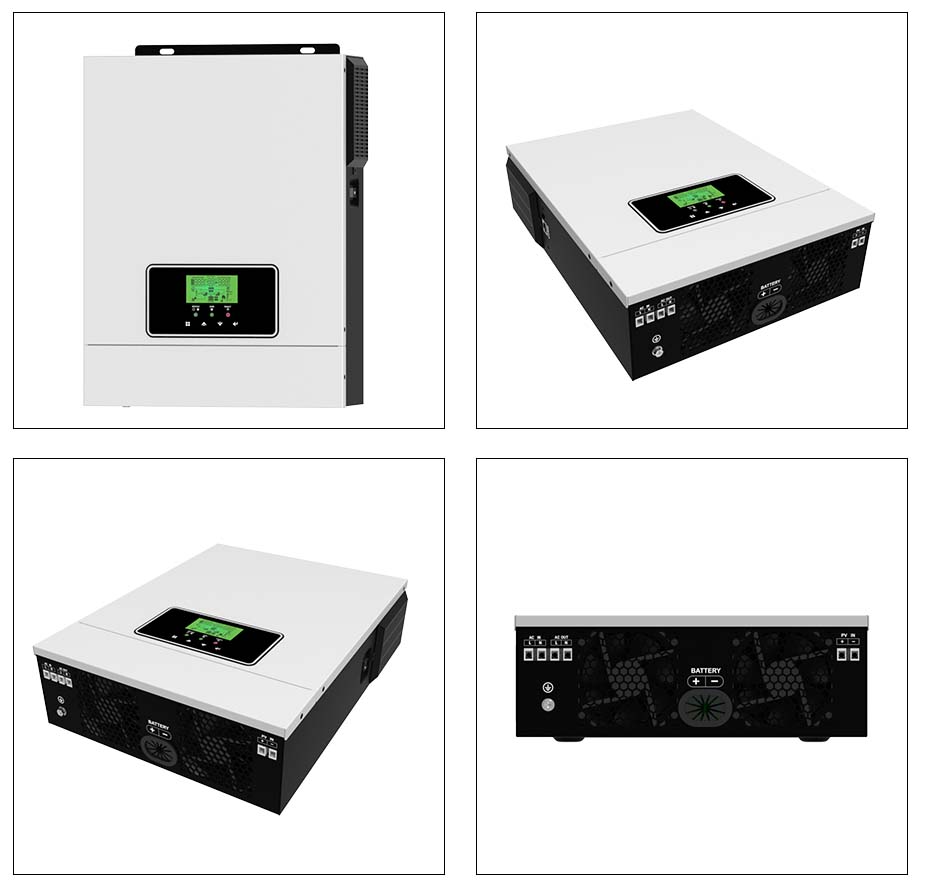
Upgrading your inverter topology provides specific operational improvements. Clean power fundamentally changes how inductive loads behave. The benefits extend beyond simple functionality. They directly impact equipment survival, thermal management, and acoustic performance in off-grid environments.
Inductive motors experience Locked Rotor Amps (LRA) during startup. For the first few milliseconds, the motor rotor is stationary. The motor acts almost like a short circuit, drawing massive current to overcome mechanical inertia and begin spinning. This inrush current often exceeds the running wattage by three to five times. The power supply must deliver this surge without dropping the voltage.
Pure sine wave architecture excels at sustaining voltage under heavy inductive surge. The internal transformers and capacitor banks act as energy buffers. They deliver the required amperage instantly. This prevents the inverter from triggering a low-voltage disconnect. It also prevents damaging voltage sags that can cause the motor to stall. A stalled motor will quickly overheat and trip its internal thermal overload protector. If the overload protector fails, the motor windings will melt.
Heat is the primary enemy of any electric motor. Feeding clean power to a motor significantly reduces its operating temperature. The elimination of harmonic distortion means the motor operates within its designed thermal limits. Motors running on pure sine waves often run 20 to 30 degrees cooler than those forced to run on modified waves.
This reduced heat directly correlates to equipment preservation. Inside the motor, thin enamel insulation coats the copper windings. Industry standards classify this insulation by temperature ratings (e.g., Class B, Class F). Excess heat degrades this insulation rapidly. A general rule in motor maintenance is that every 10°C increase above the rated temperature cuts the insulation life in half. Cooler operation also preserves the lubricating grease inside the motor bearings. Clean power ensures the internal components last for their full engineered lifespan.
Modified sine waves cause a characteristic electrical hum. You hear this loudly in ceiling fans, refrigerator compressors, and power tools. The stepped voltage literally causes the metal laminations inside the motor stator to vibrate aggressively. This phenomenon, known as magnetostriction, creates acoustic resonance. It is annoying to listen to and mechanically destructive over time.
Pure sine wave power eliminates this acoustic noise completely. The smooth voltage transitions prevent the laminations from vibrating out of sequence. Ceiling fans operate silently. Refrigerator compressors run with a smooth, quiet hum. Power tools operate without the harsh, grinding electrical noise. The result is a smoother, quieter, and safer operational environment, particularly in residential off-grid cabins or mobile RV applications.
Specific equipment types absolutely require pure sine wave power. Mapping these applications helps prevent costly system design errors. Understanding why certain appliances fail on modified power dictates how you design reliable off-grid electrical systems.
Modern cooling appliances rely on hermetically sealed compressors. These compressors house the electric motor and the mechanical pump inside a single welded steel shell. They are highly susceptible to modified sine wave damage. The internal motor relies on the flow of cold refrigerant gas to keep it cool during operation.
If a compressor runs on distorted power, it spins slower and generates excess heat. The reduced speed means it pumps less refrigerant. Less refrigerant means less cooling for the motor itself. This creates a dangerous thermal feedback loop. The compressor risks stalling completely. It will repeatedly trip its thermal overload switch. Eventually, the compressor will suffer a catastrophic burnout, ruining the appliance and spoiling the contents of the refrigerator or freezer.
Well systems demand massive starting torque. A submersible pump must push a heavy column of water hundreds of feet vertically against gravity. Clean power directly impacts the pump's torque output and water delivery rates. A sensitive appliance solar inverter ensures the pump motor receives the exact voltage curve required to generate maximum rotational force.
Using modified power on a deep-well pump causes premature wear. The motor struggles to maintain RPMs against the static water pressure. It draws excessive current and overheats deep underground. Replacing a deep-well pump is incredibly expensive and labor-intensive. It requires a boom truck and a crew to pull hundreds of feet of pipe and heavy wiring out of the ground. Clean power prevents this costly maintenance nightmare.
Modern appliances rarely use simple on/off motors anymore. They utilize electronic speed controls, microprocessors, and digital timers. Front-loading washing machines, modern HVAC units, and high-end pool pumps feature Variable Speed Drives (VSDs). These drives convert incoming AC to DC, then invert it back to a custom AC frequency to precisely control motor speed.
These complex electronics fail to operate entirely on modified sine waves. The microprocessors rely on the zero-crossing point of the AC wave for timing. The blocky steps of a modified wave confuse the digital logic. Furthermore, the sharp voltage spikes overheat the input rectifiers and capacitors inside the VSD. The appliance will throw error codes, refuse to start, or suffer permanent damage to its internal control boards.
Not everything requires pure sine wave power. You can identify less sensitive electronic devices easily. Simple resistive loads do not care about waveform shape. Incandescent lighting, basic heating elements, traditional coffee makers, and older brushed universal motors work fine on modified power. For these specific applications, the lower design complexity of a modified inverter remains acceptable. However, if any induction motor, compressor, or digital circuit is present, clean power becomes mandatory.
| Appliance Type | Pure Sine Wave Requirement | Reasoning |
|---|---|---|
| Refrigerators & Freezers | Mandatory | Hermetic compressors overheat and stall on modified waves. |
| Submersible Well Pumps | Mandatory | Requires high starting torque; replacement labor is highly expensive. |
| Washing Machines (Front Load) | Mandatory | Contains Variable Speed Drives (VSDs) and digital timing boards. |
| Incandescent Lighting | Not Required | Simple resistive load; unaffected by waveform shape. |
| Basic Space Heaters | Not Required | Resistive heating elements generate heat regardless of waveform. |
Balancing higher procurement costs against operational realities requires a system-wide perspective. You must look beyond the initial purchase order. The true value of an inverter lies in how it protects the rest of your electrical infrastructure and reduces long-term maintenance overhead.
The market reality is straightforward. Pure sine wave inverters carry a higher initial capital cost than modified sine wave inverters of the same wattage. This premium pays for the heavy copper transformers, advanced microprocessors, and complex filtering capacitors required to smooth the waveform.
You must calculate the return on investment based on replacement costs. Consider the cost of replacing a single damaged refrigerator, a ruined HVAC compressor, or a burnt-out well pump. The premium paid for a motor load power inverter is significantly lower than the cost of replacing just one major appliance. Clean power acts as an insurance policy for your expensive equipment. It prevents the cascading failures that occur when dirty power degrades motor insulation over months of use.
Pure sine wave technology has one primary drawback. It features a higher parasitic draw, also known as idle consumption. The inverter must continuously process digital pulses and keep its transformers energized to deliver a smooth waveform. The internal circuitry remains active even when no appliances are running. This draws a small, constant amount of power from the battery bank.
You must manage this idle draw in off-grid solar applications. Many high-quality units feature programmable sleep modes or search modes. They utilize load-sensing features to drop into a low-power state when no AC draw is detected. The inverter sends out a small pulse every few seconds to check for a load. When a refrigerator thermostat clicks on, the inverter wakes up instantly to provide full power. This mitigates the idle consumption penalty effectively.
You must balance the inverter's idle draw against the motor's running efficiency. Motors running on pure sine waves consume up to 20% less active power than they do on modified waves. They do not waste energy generating heat and vibration. This massive gain in active running efficiency easily offsets the inverter's slightly higher idle draw. If a well pump runs for two hours a day, the wattage saved by running efficiently far exceeds the wattage lost to the inverter's idle draw over 24 hours. The overall result is a net reduction in battery drain during daily operation.
Selecting the right inverter topology is only the first step. You must take specific technical steps to ensure the unit performs reliably under real-world conditions. Proper sizing and integration prevent system bottlenecks, voltage sags, and hardware failures.
You must size your inverter based on the highest inductive surge, not just the continuous running load. A common mistake is sizing the inverter exactly to the running wattage of the appliances, leading to immediate overload shutdowns when a motor kicks on.
Under-sizing the inverter is incredibly dangerous. If the inverter cannot handle the surge, the voltage will dip severely. This voltage sag damages both the inverter's internal components and the motor itself.
The inverter is only as strong as the battery bank feeding it. You must ensure the DC battery bank can deliver the required amperage during motor startup. When a well pump surges, the inverter pulls massive DC current from the batteries. If the battery bank is too small, or the internal resistance is too high, the DC voltage will sag.
Severe DC voltage sag causes the inverter to shut down to protect itself, resulting in a failed motor start. Ensure your battery cables are appropriately thick (often 4/0 AWG for large inverters) to handle the high amperage without voltage drop. Verify that your battery chemistry can support high C-rate discharges. Lithium iron phosphate (LiFePO4) batteries generally handle these sudden surges better than older lead-acid banks due to their lower internal resistance.
The market is flooded with low-cost inverters claiming pure sine wave capabilities. You must learn how to read specification sheets to verify these claims. Look specifically for the Total Harmonic Distortion (THD) rating. A genuine pure sine wave unit will specify a THD strictly below 3% to 5%.
Beware of red flags in product descriptions. If a unit is suspiciously lightweight, it likely lacks the heavy internal copper transformers and filtering inductors necessary to clean the waveform. These false units often produce a "dirty" sine wave that still damages sensitive electronics. Always demand a clear THD specification before integrating an inverter into a motor-heavy system.
A: Yes. The harmonic distortion causes the compressor motor to run hotter and less efficiently, which can degrade the internal insulation and lead to premature failure.
A: Creating a smooth, utility-grade sine wave requires complex internal circuitry and continuous digital pulse post-processing, which draws a small, constant amount of power even when no appliances are running.
A: Well pumps typically require an inrush current that is 3 to 5 times their running wattage. An accurate sizing calculation must account for this peak to prevent inverter overload and ensure smooth startup.
A: High-quality pure sine wave inverters should specify a THD of less than 5%, with premium models operating at less than 3%, closely mimicking or exceeding the power quality of the utility grid.
A: No. The buzzing sound in motors and fans is a direct symptom of the stepped voltage in modified sine waves. A pure sine wave inverter will operate fans silently.
A: While older, brushed universal motors may run on modified sine waves, modern power tools with variable speed triggers, brushless motors, or sensitive battery chargers require pure sine wave power to function correctly and avoid damage.